From Wagon Ruts to Waze: How Americans Conquered the Cross-Country Drive
From Wagon Ruts to Waze: How Americans Conquered the Cross-Country Drive
Picture this: You're behind the wheel, coffee in the cupholder, a playlist loaded on your phone, and roughly 2,800 miles of interstate between you and the Pacific Ocean. You'll be there in four or five days — maybe less if you push it. Easy enough to take for granted. But wind the clock back a century, and that same trip was closer to an expedition than a vacation.
The American road trip has become a cultural institution. But what we think of as a casual summer adventure was, not so long ago, a serious undertaking that demanded preparation, courage, and a fair amount of luck.
What Driving Across America Actually Looked Like in 1920
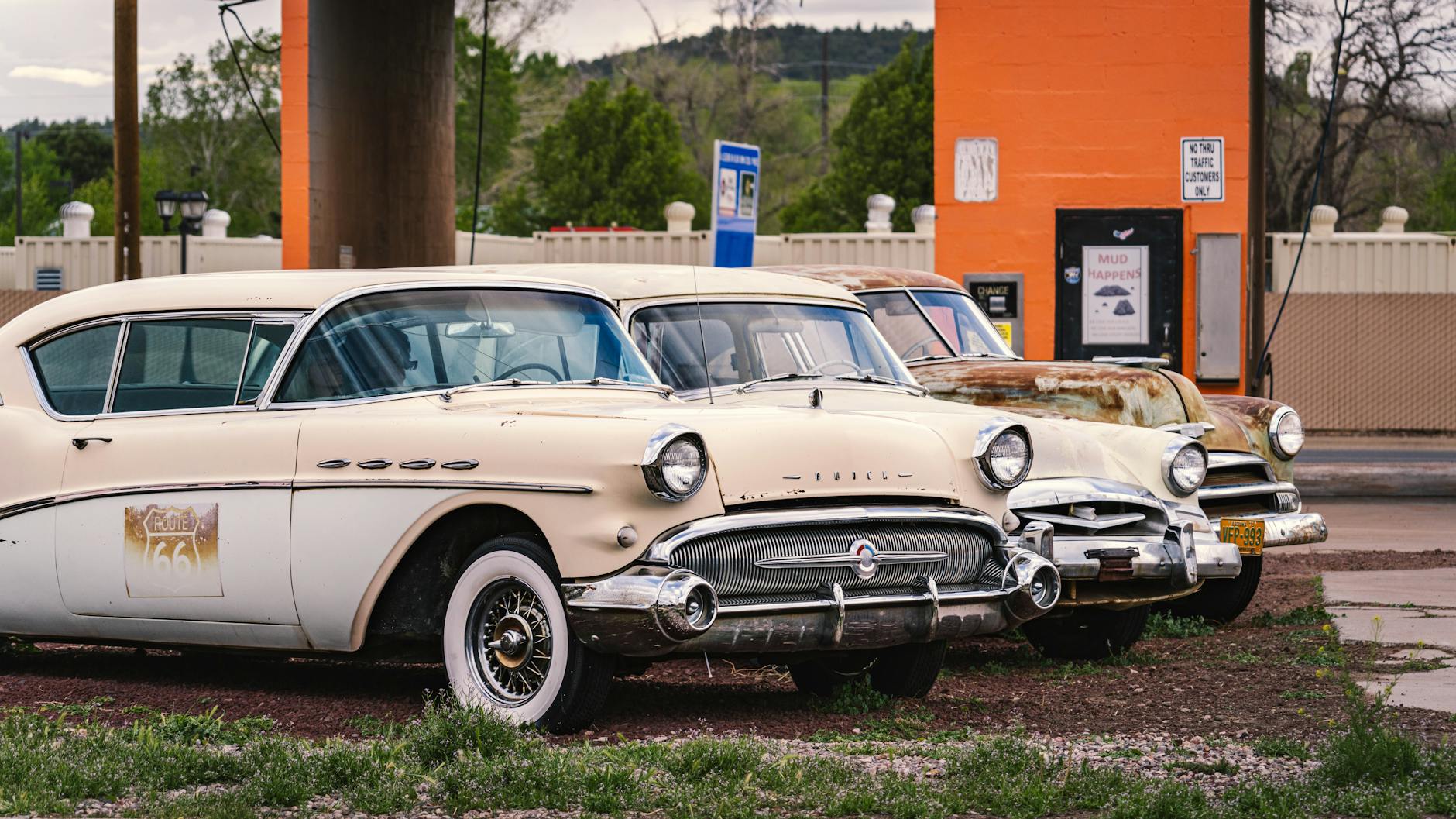
When the first wave of automobile enthusiasts attempted cross-country drives in the early 1900s, the infrastructure simply didn't exist to support them. Roads — and we use that term loosely — were mostly unpaved, poorly marked, and completely unconnected. Drivers relied on painted rocks, fence posts, and hand-drawn guidebooks to navigate between cities.
The famous Lincoln Highway, established in 1913 as the first coast-to-coast road, sounds impressive on paper. In practice, large stretches of it were little more than dirt tracks that turned to impassable mud in the rain. Early motorists carried shovels as standard equipment. Not as a precaution — as a necessity.
A Model T Ford, the vehicle most Americans could actually afford in that era, topped out around 40 to 45 miles per hour under ideal conditions. Real-world average speeds on those roads? Closer to 15 to 20 mph. A cross-country journey from New York to Los Angeles typically took three to four weeks, assuming nothing went seriously wrong. And things went seriously wrong all the time. Flat tires, mechanical failures, washed-out roads, and a near-total absence of roadside services made every trip an adventure in the least comfortable sense of the word.
In 1919, a young Army officer named Dwight D. Eisenhower joined a military convoy attempting to drive from Washington, D.C. to San Francisco. It took 62 days. The experience left an impression on him that would shape American infrastructure for generations.
The Law That Changed Everything
Fast-forward to 1956. Eisenhower, now President, signed the Federal Aid Highway Act into law — one of the most consequential pieces of legislation in American history, even if it rarely gets the attention it deserves.
The act authorized the construction of 41,000 miles of interstate highways, funded primarily by the federal government. The stated rationale was partly military — Eisenhower had seen how Germany's Autobahn network allowed rapid troop movement during World War II, and he wanted the same capability for the U.S. But the civilian impact turned out to be even more transformative.
Over the following decades, a standardized, high-speed highway network stitched the country together in a way that had never existed before. Speed limits on interstates were set at 65 to 70 mph. Roads were engineered for safety, with gentle curves, consistent lane widths, and controlled access that eliminated the constant interruptions of stop signs and traffic lights that plagued older routes.
By the 1970s, a New York to Los Angeles drive that once took weeks could realistically be completed in around five to six days of steady driving. By the 1990s, with better vehicles and more driver confidence, four to five days became the norm.
The Modern Trip: A Different Universe
Today, the math is almost absurd by historical standards. The roughly 2,800-mile drive from New York to Los Angeles along I-40 — the modern successor to the old Route 66 corridor — takes approximately 40 hours of pure driving time. Spread that over four or five days and you're looking at a genuinely comfortable journey.
Modern vehicles average 30 miles per gallon on the highway, carry sophisticated safety systems, and can go 100,000 miles without major mechanical issues as a matter of routine. Gas stations appear every few miles across the entire route. Navigation apps recalculate in real time around traffic, construction, and road closures. If you break down, roadside assistance is a phone call away — and that phone also works as a map, a hotel booking system, and an entertainment device for your passengers.
The contrast isn't just about speed. It's about the psychological weight of the journey. Early cross-country drivers wrote wills before they left. Today's road-trippers debate which podcast to start first.
Some Numbers Worth Sitting With
Just to make the shift concrete:
- 1919: Army convoy, Washington D.C. to San Francisco — 62 days
- 1930: Typical cross-country drive — 3 to 4 weeks
- 1960: Post-interstate construction — 10 to 14 days
- 1990: Comfortable cross-country — 5 to 7 days
- 2025: New York to Los Angeles — 4 to 5 days, 40 hours of drive time
That's not incremental improvement. That's a complete reinvention of what the journey means.
The Road Ahead
There's something worth pausing on here. The cross-country road trip is often framed as a uniquely American experience — a rite of passage, a way of connecting with the country's vastness. And it is. But it's only become accessible as a cultural ritual because of enormous public investment in infrastructure, decades of automotive engineering, and technological tools that would have seemed like science fiction to those early motorists shoveling mud off the Lincoln Highway.
Next time you merge onto an interstate and set your cruise control, maybe give a quiet nod to Eisenhower. The open road didn't happen by accident.