Margaret Thompson was 67 when she slipped on her icy Boston driveway in 1973. The crack in her hip bone was audible to her neighbor who rushed over to help. What followed was six weeks flat on her back, a steel pin that never quite held, and a walker that became her permanent companion until she died eight years later.
Her granddaughter Sarah fell down the same driveway in 2019 at age 71. She broke her hip in almost exactly the same spot. Three hours later, she walked out of Massachusetts General Hospital with a titanium joint that would outlast her original bone.
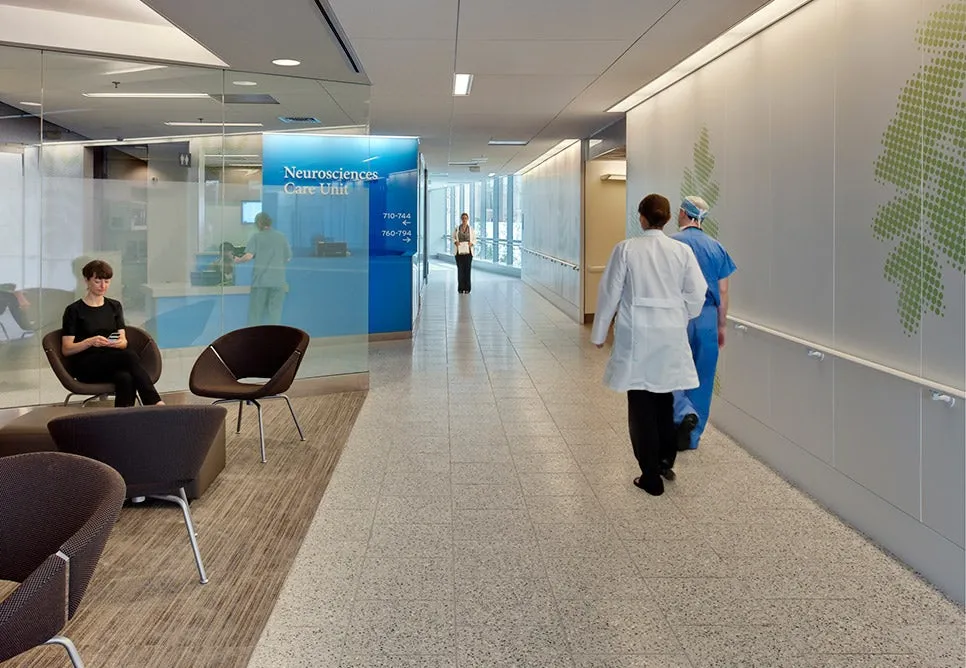 Photo: Massachusetts General Hospital, via architizer-prod.imgix.net
The difference between these two nearly identical accidents reveals one of medicine's quietest revolutions.
When Breaking Meant Breaking Forever
For most of human history, orthopedic trauma was a one-way street toward disability. A shattered femur in 1950 meant months of immobilization in a hospital bed, hoping the bone would heal straight. It usually didn't.
The medical toolkit was brutally simple: wooden splints, plaster casts, and prayer. Surgeons could set bones, but they couldn't rebuild them. Complex fractures often meant amputation. Hip fractures in elderly patients carried a 50% mortality rate within a year—not from the break itself, but from the complications of being bedridden for months.
Dr. Robert Morrison, who practiced orthopedics in Cleveland during the 1960s, kept meticulous records. His files show patient after patient whose active lives ended the moment they broke something important. "We were really just damage control specialists," he recalled in a 2018 interview. "Our job was to prevent infection and hope for the best."
The psychological toll was enormous. Athletes knew their careers hung by a tendon. Factory workers understood that the wrong fall could end their ability to provide for their families. Elderly Americans often stopped leaving their homes entirely, terrified of the slip that would confine them to a wheelchair.
The Titanium Revolution
The transformation began quietly in the 1970s with metallurgy advances that had nothing to do with medicine. Aerospace engineers developing stronger, lighter materials for jets accidentally created the perfect bone substitute: titanium alloys that the human body wouldn't reject.
By the 1980s, orthopedic surgeons were experimenting with artificial joints that could actually improve on the original hardware. The first hip replacements were crude affairs, but they proved a revolutionary concept: you could swap out worn parts like changing a tire.
Arthroscopic surgery arrived around the same time, allowing surgeons to repair damage through tiny incisions using miniature cameras. Injuries that once required sawing through muscle and bone could now be fixed through holes the size of buttonholes.
The real breakthrough came in the 1990s when computer modeling allowed surgeons to design custom implants matched to each patient's anatomy. Suddenly, joint replacement wasn't just about getting people walking again—it was about getting them running, skiing, and playing tennis at 75.
Same-Day Miracles
Today's orthopedic surgery would seem like science fiction to doctors from just two generations ago. Knee replacements that once required a week-long hospital stay are now outpatient procedures. Patients walk into the surgery center in the morning and drive home that afternoon with joints that will function better than their originals.
The statistics tell the story. In 1970, fewer than 50,000 Americans received joint replacements annually. By 2020, that number had exploded to over 1 million. More telling: the average age of joint replacement patients has actually increased, meaning people are staying active longer and expecting their bodies to keep up.
Modern trauma surgery can rebuild limbs that would have been amputated without question fifty years ago. Surgeons routinely reattach severed fingers, repair shattered bones with titanium scaffolding, and replace entire joints in patients well into their 90s.
The Hidden Cost of the Old Way
The human toll of primitive orthopedic care extended far beyond individual patients. Families restructured their entire lives around disabled relatives. The economy lost millions of productive years to injuries that are now minor inconveniences.
Consider what we now call "routine" sports injuries. A torn ACL in 1970 meant the end of any athletic career, amateur or professional. Today, that same injury sidelines a player for six months before they return stronger than before. The psychological shift is profound: athletes no longer play in fear of the career-ending injury because those injuries largely don't exist anymore.
Even more significant was the impact on aging. The specter of a broken hip turned millions of older Americans into prisoners in their own homes. The freedom to remain active into your 80s and 90s—something we now take for granted—simply didn't exist when orthopedic trauma was permanent.
What We've Gained
The transformation of orthopedic medicine represents something larger than medical progress. It's the difference between a society that accepted physical decline as inevitable and one that treats the human body as repairable, upgradeable hardware.
Today's 70-year-olds ski, run marathons, and play competitive tennis on joints that are literally stronger than the ones they were born with. The psychological impact of knowing that most physical damage can be undone has fundamentally changed how Americans approach aging and risk.
We've moved from a world where breaking something important meant your active life was over to one where it means taking a few months off before coming back better than before. In the span of a single generation, we've essentially solved one of humanity's oldest problems: the fragility of our own bones.
Margaret Thompson's granddaughter Sarah is now 76. She still shovels her own driveway.