What Your Doctor Didn't Know Could Kill You — And for Millions of Americans, It Did
What Your Doctor Didn't Know Could Kill You — And for Millions of Americans, It Did
Think about the last time you had a physical. Maybe your doctor ordered bloodwork that checked your cholesterol, blood sugar, kidney function, and a dozen other markers. Maybe you got a referral for a screening — a colonoscopy, a mammogram, a calcium score. The whole thing probably felt routine, maybe even a little tedious.
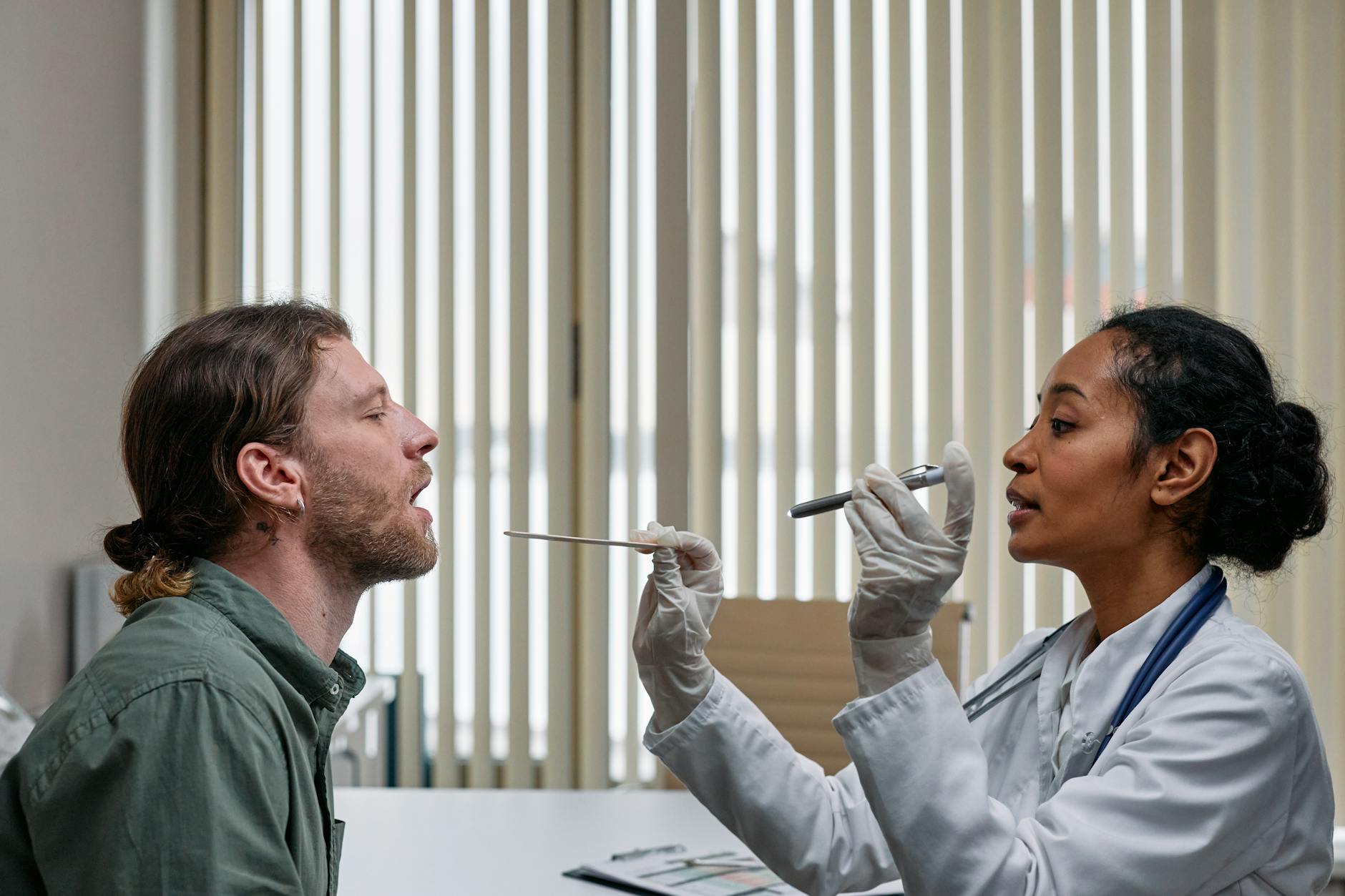
Now imagine walking into that same doctor's office in 1950 and receiving a genuinely state-of-the-art examination for the era. No blood panel. No imaging. No screening protocols for cancer or cardiovascular disease. Your doctor would take your pulse, check your blood pressure with a basic cuff, listen to your chest, look in your eyes and throat, and ask how you were feeling. That was largely it.
If something serious was brewing silently inside your body — and for millions of mid-century Americans, something was — there was a reasonable chance it would stay silent until it wasn't.
The Diagnosis That Wasn't
Heart disease is the clearest example of how much has changed, and how much was missed.
By the 1950s, physicians understood that heart attacks happened. What they didn't have was any reliable way to identify who was at risk before the event occurred. The concept of cardiovascular risk factors as we understand them today — elevated LDL cholesterol, high blood pressure over time, blood sugar dysregulation — was only beginning to take shape in the medical literature.
The Framingham Heart Study, launched in 1948, was the pioneering effort that started connecting those dots. But its findings took years to filter into clinical practice, and the tools to act on them were limited anyway. Statins, now among the most prescribed drugs in America, didn't enter widespread use until the late 1980s. Before that, a doctor who suspected a patient was at cardiovascular risk had very few pharmacological options to offer.
The result was that millions of Americans — including many who felt perfectly fine — were walking around with arterial disease quietly progressing, with no one and nothing to catch it. A massive heart attack at 55 wasn't a failure of medical care by the standards of the time. It was just what happened.
Cancer: The Disease You Didn't Know You Had
The situation with cancer was, if anything, more sobering.
In 1950, the average cancer diagnosis came when symptoms were already serious enough to bring a patient through the door. A lump that had grown large enough to feel. Bleeding that couldn't be ignored. Pain that had become constant. By that point, in the absence of the treatment options we have today, outcomes were often grim.
Breast cancer screening via mammography didn't become a standard recommendation until the 1970s and 1980s. The Pap smear, developed in the 1940s, was only gradually adopted as a routine screening tool through the following decades. Colonoscopy for colorectal cancer screening became widespread even later. Prostate-specific antigen (PSA) testing wasn't available until the 1980s.
Each of those tools represents a fundamental shift in the same direction: catching disease before it announces itself. Before those tools existed, the announcement often came too late.
Consider that the five-year survival rate for breast cancer in the early 1950s was around 60%. Today it's over 90% for cancers caught at an early stage, and the national average across all stages has climbed dramatically. That improvement reflects better treatment, yes — but it also reflects the simple, powerful act of finding disease earlier.
What a Checkup Actually Looked Like
Let's make this concrete. A routine physical examination in 1950 for a 45-year-old American man might have included:
- Blood pressure measurement
- Pulse and respiratory rate
- Auscultation (listening to the heart and lungs with a stethoscope)
- Basic reflex testing
- Visual inspection of skin, eyes, and throat
- A conversation about symptoms the patient reported
What it almost certainly did not include:
- A comprehensive metabolic panel checking kidney and liver function
- A lipid panel measuring cholesterol and triglycerides
- A fasting glucose or HbA1c test for diabetes risk
- An electrocardiogram unless symptoms specifically suggested one
- Any imaging beyond an X-ray if something structural was suspected
- Cancer screening of any kind as a preventive measure
Diabetes is worth a specific mention here. Type 2 diabetes — which affects roughly 37 million Americans today and is considered a major driver of cardiovascular disease, kidney failure, and nerve damage — was largely undetected in its early stages throughout much of the 20th century. The blood glucose testing that now flags pre-diabetes routinely wasn't part of standard care. Many patients weren't diagnosed until complications had already begun.
The phrase "he was never sick a day in his life" appears in countless mid-century obituaries. It often meant something different than it sounds. It sometimes meant the disease was there — it just wasn't found.
The Technology That Changed the Picture
The transformation of diagnostic medicine over the past 70 years has come in waves.
The development of practical blood analyzers in the 1960s and 70s made comprehensive blood panels affordable and fast. CT scanning arrived in the early 1970s, followed by MRI in the 1980s — both giving physicians the ability to see inside the body without surgery. Ultrasound became a standard tool. Genetic testing has now added another dimension entirely, identifying inherited risk factors before disease ever develops.
And perhaps most significantly, the entire philosophy of medicine shifted. The mid-century model was largely reactive: patients came in when they felt sick, and doctors tried to help. The modern model is increasingly preventive: the goal is to find problems before they become symptoms, and to manage risk factors long before they produce disease.
The Distance Between Then and Now
It's worth sitting with how personal this history is. If your grandparents or great-grandparents died of a heart attack in their 50s or were lost to a cancer that was caught too late, there's a meaningful probability that the same condition, in the same body, caught by today's diagnostic tools, would have had a different story.
That's not a comfortable thought. But it's a clarifying one.
The checkup you treat as a minor inconvenience — the fasting bloodwork, the follow-up call about your cholesterol, the reminder to schedule a colonoscopy — represents the accumulation of decades of medical learning, hard-won through research, technology, and an enormous number of cases where the outcome was worse than it needed to be.
Medicine hasn't solved everything. But the gap between what a doctor knew in 1950 and what a doctor knows today is vast enough that they are, in many meaningful ways, practicing an entirely different discipline. The body hasn't changed. Our ability to read it has.