Your phone probably contains more photographs than your grandparents took in their entire lifetime. That's not hyperbole—it's a mathematical reality that reveals just how radically we've transformed our relationship with capturing memories.
In 1975, the average American family took perhaps 100 photographs per year. Today, that same family might take 100 photos during a single weekend trip to the beach. But numbers only tell part of the story. What we've really changed is the entire psychology of preserving moments—and the question isn't just what we've gained, but what we might have lost when photography stopped requiring patience, intention, and a little bit of faith.
The Arithmetic of Scarcity
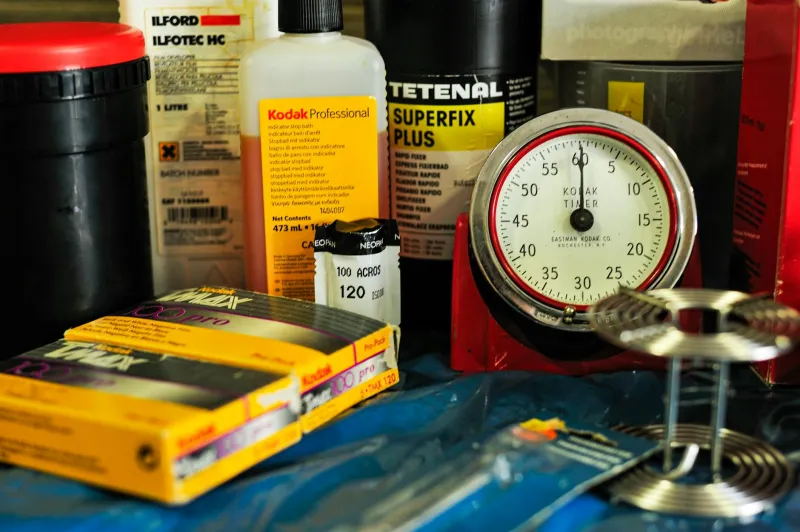
Every photograph in the pre-digital era began with a calculation. Film cost money—roughly 50 cents per roll in 1980, equivalent to about $2 today. Processing cost more money. And you only had 24 or 36 chances per roll to capture something worth keeping.
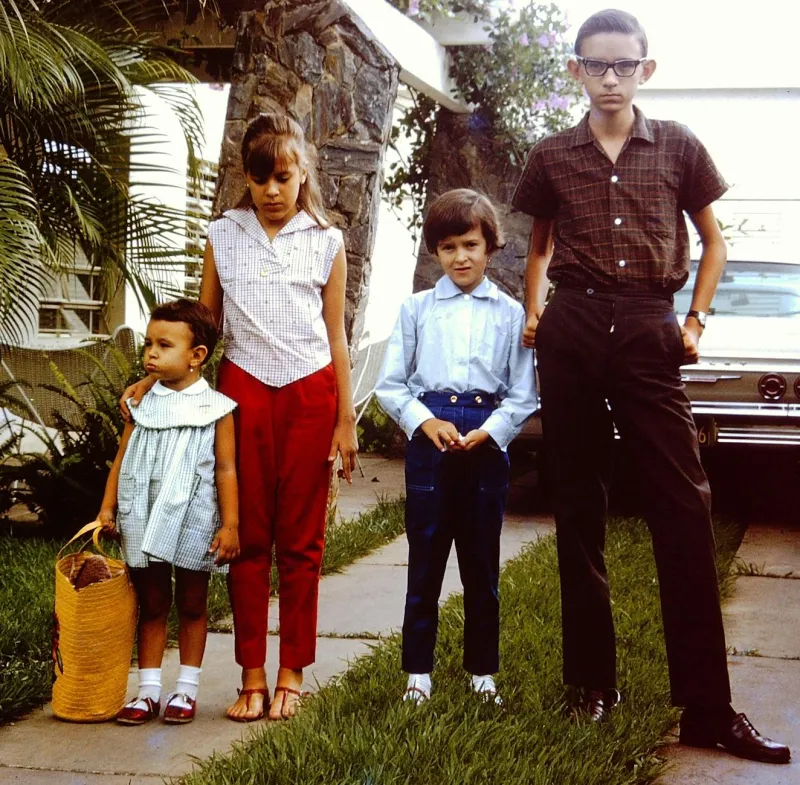
This scarcity created a different kind of photographer. Parents didn't document every moment of their children's lives; they chose moments. Birthday candles being blown out, yes. The fourteenth attempt to get the perfect birthday smile, probably not. The result was a more curated version of family history, where each frame carried weight because each frame carried cost.
Families developed strategies around this limitation. The designated family photographer—usually Dad—became skilled at mental composition, checking backgrounds, waiting for the right expression. "Hold that pose" wasn't just direction; it was economic necessity.
The Great Wait
But perhaps the most profound difference was time. Between clicking the shutter and seeing your results stretched a gulf of days or weeks that fundamentally changed what photography meant.
You dropped off your roll at the drugstore counter or mailed it to Kodak, then waited. And waited. The anticipation was part of the experience—wondering if that sunset actually looked as spectacular as you remembered, whether everyone's eyes were open in the group shot, if you'd properly captured your daughter's first steps.
When the envelope of prints finally arrived, opening it was like Christmas morning. But it was also frequently disappointing Christmas morning. Blurry shots, overexposed vacation scenes, group photos where someone had wandered out of frame at the crucial moment—these weren't just minor frustrations. They were permanent losses of irreplaceable moments.
The Psychology of the Single Shot
This system created photographers who thought differently. Without the ability to review and reshoot instantly, people developed an almost mystical faith in their technical skills and timing. You learned to read light, to anticipate expressions, to frame shots mentally before raising the camera.
Wedding photographers were genuine artists, not because they had better equipment than today's professionals, but because they had to be. There were no do-overs, no digital previews, no safety net of unlimited shots. Every frame had to count, creating a level of intentionality that bordered on meditation.
Families also developed different relationships with their photo collections. Because each image represented a conscious choice and financial investment, photo albums became carefully curated narratives. Pictures were selected, arranged, and preserved with the gravity of historical documents—because in many ways, that's exactly what they were.
The Revelation Ritual
The delayed gratification of film photography created rituals that have largely disappeared. Families gathered around the kitchen table to go through new prints together, sharing the experience of discovery. "Oh, look at this one!" wasn't just commentary—it was communal archaeology, uncovering shared memories that had been buried in time.
These moments often revealed surprises. Background details you hadn't noticed. Expressions captured between poses. Sometimes the "mistakes"—the candid shots, the slightly blurred action—became the most treasured images because they captured something unguarded and real.
When Perfect Became the Enemy of Meaningful
Today's digital photography has solved every technical problem that plagued the film era. We can take unlimited shots, review them instantly, delete the failures, and enhance the survivors. We've eliminated waste, uncertainty, and most forms of photographic disappointment.
But we may have created new problems in the process. When every moment can be photographed, fewer moments feel worth photographing. When every shot can be perfected, fewer shots feel authentic. When nothing is scarce, everything loses a bit of value.
Modern families often find themselves with thousands of digital images they never look at, stored in phones and cloud services like digital attics. The very abundance that was supposed to make memories more accessible has sometimes made them more forgettable.
The Paradox of Infinite Documentation
We document more of our lives than any generation in history, yet many people report feeling less connected to their memories, not more. The constant ability to capture moments can sometimes interfere with the experience of living them. The phrase "pics or it didn't happen" reveals how photography has shifted from recording life to validating it.
Children today grow up with their entire childhood documented in unprecedented detail, yet studies suggest they may have weaker autobiographical memories than previous generations. When everything is preserved externally, the internal work of memory—the selection, interpretation, and meaning-making that happened naturally in the film era—may atrophy.
What We Gained, What We Lost
The democratization of photography is undeniably positive. Families who couldn't afford regular film processing now document their lives freely. Moments that would have been lost forever—the everyday interactions, the subtle expressions, the spontaneous joy—are now preserved.
But the film era taught lessons about intentionality and patience that may be worth remembering. When photographs were scarce and uncertain, they carried different emotional weight. When you couldn't see your results immediately, you learned to trust your instincts and live fully in the moment.
Perhaps the goal isn't to return to the limitations of film photography, but to occasionally embrace its mindset. To sometimes put down the phone and trust that the memory itself is worth preserving, even without documentation. To choose moments rather than capture everything. To remember that sometimes the best photographs are the ones we never take—but fully experience instead.
In our rush to ensure no moment goes undocumented, we might occasionally pause and ask: are we saving our memories, or are we saving ourselves from having to remember?