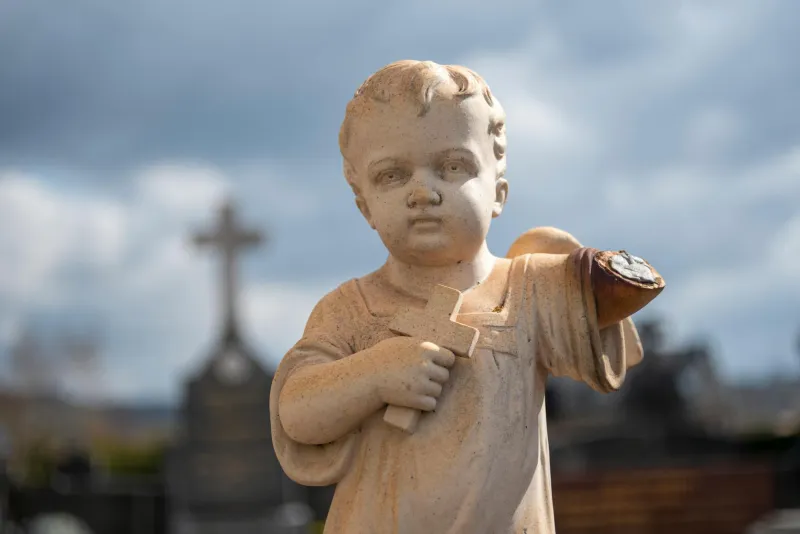
In the oldest sections of American cemeteries, the pattern is unmistakable: rows of tiny headstones, many bearing the same family name, marking lives that lasted days, weeks, or a few precious years. These miniature monuments tell the story of an America where childhood death wasn't a devastating exception — it was a heartbreaking norm.
As recently as 1900, nearly 30% of American children died before their fifth birthday. Today, that number has dropped to less than 1%. Behind this statistical transformation lies one of the most profound changes in human experience: the shift from a world where parents expected to lose children to one where such loss is almost unthinkable.
The Mathematics of Heartbreak
The numbers are staggering in their brutality. In 1850, the infant mortality rate in some American cities exceeded 400 deaths per 1,000 births. Nearly half of all children born wouldn't live to see their first birthday. Those who survived infancy faced a gauntlet of diseases that modern parents know only as vaccine names: diphtheria, whooping cough, measles, scarlet fever.
Families adapted to this reality in ways that seem unimaginable today. Parents often delayed naming children until they were confident the baby would survive. Family photographs from the era rarely include infants — not because photography was expensive, but because there was no guarantee the child would live long enough to make the portrait worthwhile.
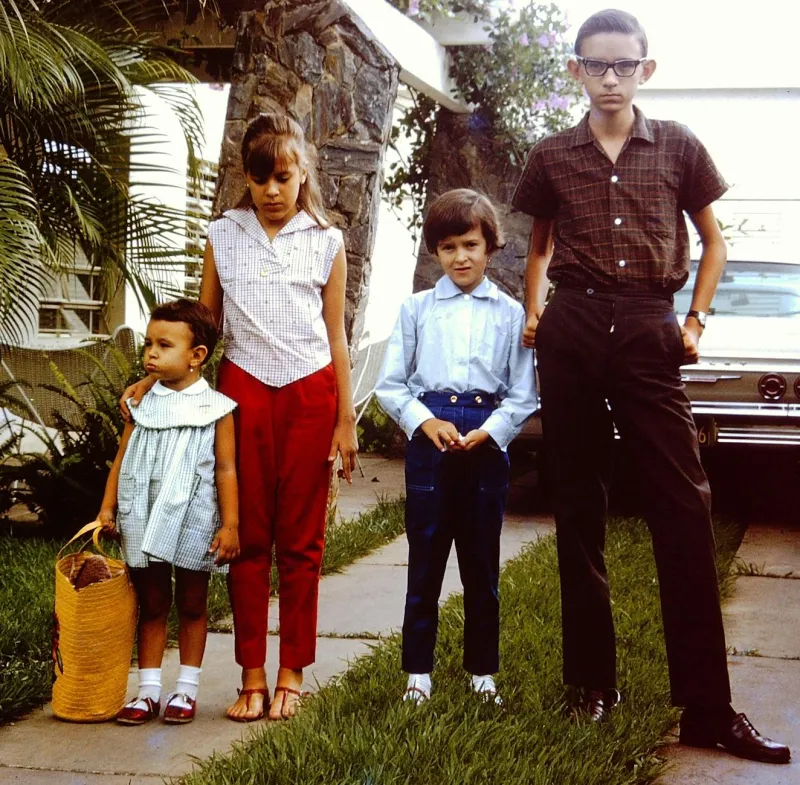
The Shaker religious community, known for meticulous record-keeping, documented a typical pattern: of 15 children born to one Kentucky family between 1820 and 1845, only 7 lived to adulthood. This wasn't considered unusual — it was expected.
 Photo: Shaker religious community, via c8.alamy.com
When Planning a Family Meant Planning for Loss
American families in the 19th and early 20th centuries structured their lives around anticipated child mortality. Large families weren't just cultural preference — they were insurance policies against devastating loss. Having eight or ten children meant hoping three or four would survive to care for aging parents.
This reality shaped everything from naming conventions to inheritance planning. Families often reused names of deceased children for later births. The practice wasn't morbid — it was practical, ensuring family names and memory would survive even when children didn't.
Women's lives revolved around cycles of pregnancy, birth, and often grief. Mary Todd Lincoln, whose son Willie died of typhoid fever in the White House, was hardly unique among American mothers. Most women of her generation buried at least one child. The difference was that her grief became national news.
 Photo: White House, via anupkumarchaturvedi.com
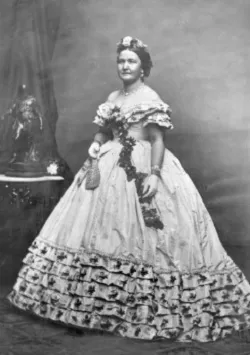 Photo: Mary Todd Lincoln, via www.abraham-lincoln-history.org
The Diseases That Stalked Every Nursery
The killers were everywhere and often invisible. Cholera infantum, a catch-all term for deadly diarrheal diseases, claimed thousands of babies each summer. Whooping cough could suffocate a child in their sleep. Scarlet fever turned a mild sore throat into a death sentence.
Diphtheria was perhaps the most feared. Known as "the strangling angel of children," it created a thick membrane in the throat that slowly suffocated its victims. Entire families could be wiped out in a matter of weeks. In 1878, diphtheria killed nearly 9,000 American children.
Winter brought pneumonia and influenza. Summer brought dysentery and typhoid. Spring and fall offered little respite — measles, mumps, and scarlet fever circulated year-round. Parents lived in constant fear, watching for symptoms that might herald another tragedy.
The Rituals of Anticipated Grief
American culture developed elaborate rituals around childhood death because such rituals were necessary for survival. Mourning clothes for children were as common as baptismal gowns. Funeral parlors specialized in child-sized caskets. Photographers offered post-mortem portraits as final mementos for grieving families.
Literature and music of the era reflected this reality. Popular songs like "The Little Rosewood Casket" and "A Flower from My Angel Mother's Grave" weren't considered morbid — they were expressions of shared experience. Nearly every American family could relate to lyrics about empty cradles and angel children.
Religion provided the primary framework for understanding such devastating loss. The concept of infant innocence and immediate ascension to heaven offered comfort to parents who might lose multiple children. Churches developed specific liturgies for child funerals, and cemetery sections were designated specifically for young graves.
The Quiet Revolution in Tiny Lives
The transformation began gradually in the early 1900s with improved sanitation and nutrition. Cities built sewer systems and provided clean water. Pasteurization made milk safer. Better understanding of hygiene reduced transmission of deadly diseases.
Vaccines delivered the decisive blow. The diphtheria vaccine, introduced in the 1920s, virtually eliminated the strangling angel. Polio vaccines in the 1950s ended the summer terror that sent children to iron lungs. The measles vaccine prevented a disease that had killed 500 American children annually.
Neonatal intensive care units, developed in the 1960s, meant that premature babies who would have died automatically now had fighting chances. Antibiotics turned deadly infections into minor inconveniences. Heart surgery gave hope to children born with defects that had been automatic death sentences.
When Empty Cradles Became Unthinkable
By the 1970s, childhood death had become so rare that parents no longer planned for it. Baby books assumed children would live to fill them. College savings accounts became common because parents could reasonably expect their children to reach college age. The shift was psychological as much as statistical — from expecting loss to expecting survival.
This transformation created new anxieties. Parents who could reasonably expect all their children to survive became hyper-vigilant about smaller risks. Car seats, bicycle helmets, and childproofing reflected a world where preventing even minor injuries became paramount because major threats had largely disappeared.
The rare instances of childhood death became community tragedies rather than family expectations. When a child dies today, neighbors bring casseroles and establish memorial funds because such loss is so unusual it requires special response.
The Ghosts in Every Family Tree
Look closely at any American family tree from before 1950, and you'll find them: the children who lived just long enough to be named, the toddlers who died in epidemics, the teenagers who succumbed to diseases that are now prevented with simple vaccines.
These weren't footnotes in family history — they were central characters whose absence shaped the families they left behind. Parents who lost children often became different people. Surviving siblings grew up in shadows of grief. Extended families rallied around repeated tragedies in ways that created tight bonds born of shared suffering.
The Weight of Expecting Survival
Today's parents live with expectations their ancestors couldn't imagine. We assume our children will outlive us. We plan their futures decades in advance. We worry about college admissions and career prospects because we have the luxury of assuming our children will live long enough to face such challenges.
This represents one of the most dramatic transformations in human experience. For most of history, having children meant preparing to lose some of them. Today, losing a child is so rare that we have few cultural frameworks for processing such devastating loss.
The shift from expecting childhood death to expecting childhood survival represents more than medical progress — it represents a fundamental change in what it means to be human. We've moved from a world where love was always shadowed by anticipated loss to one where we can love our children with the reasonable expectation that they'll grow up to love children of their own.
In the quiet corners of old American cemeteries, tiny headstones still mark the lives that ended too soon. But they also mark something else: the distance we've traveled from a world where empty cradles were as common as full ones, to a world where every child has a reasonable chance of filling their own cradle someday.