The Hour That Decided Whether You Lived or Died: How America Built the Modern Emergency Room
Picture this: It's 1955, and you're driving down Route 66 when another car slams into yours. Your leg is clearly broken, you're bleeding heavily, and you're in excruciating pain. Where do you go?
The honest answer? You probably don't make it.
Not because the injuries were necessarily fatal, but because America had no real system for handling medical emergencies. Hospitals had "accident rooms" staffed by whoever happened to be available — often medical students or general practitioners with no emergency training. Ambulances were essentially hearses that sometimes picked up living people. And if you needed surgery? Well, you'd better hope the right surgeon was in town and willing to come in.
Today, that same accident would trigger a choreographed response that would have seemed like science fiction to our 1950s victim: paramedics trained in advanced life support, trauma centers with specialized equipment, and emergency physicians who've spent years learning to stabilize the human body in crisis.
When Every Emergency Was a Roll of the Dice
Before the 1960s, American emergency care was shockingly primitive. Most hospitals treated emergencies as an afterthought — a necessary evil that interrupted their real work of scheduled procedures and planned treatments. The "emergency room" was often just a single room near the hospital entrance, staffed by whoever drew the short straw that day.
Doctors weren't trained in emergency medicine because emergency medicine didn't exist as a specialty. A heart attack patient might be seen by a dermatologist. A car crash victim could end up with a psychiatrist trying to stop the bleeding. The concept of triage — systematically prioritizing patients by severity — was virtually unknown outside of military field hospitals.
Ambulance service was even worse. In many American cities, funeral homes provided ambulance service as a side business, using the same vehicles for both purposes. The "attendants" had no medical training beyond basic first aid. Their job was transportation, not treatment. If you were dying, they'd drive fast and hope for the best.
The Battlefield Lessons That Changed Everything
The transformation began, ironically, with war. Military surgeons in World War II, Korea, and especially Vietnam learned that quick intervention could save lives that would have been written off as hopeless. They developed the concept of the "golden hour" — the critical window when aggressive treatment could mean the difference between life and death.
These battlefield innovations slowly made their way into civilian medicine. The first civilian trauma center opened in Baltimore in 1958, modeled directly on military field hospitals. The idea was revolutionary: instead of making do with whatever doctor happened to be available, why not have specialists ready and waiting for the worst cases?
But the real breakthrough came in the 1970s with the recognition that emergency medicine should be its own medical specialty. Suddenly, hospitals began training doctors specifically to handle medical crises. These weren't surgeons or internists doing emergency work on the side — they were physicians whose entire career focused on those critical first hours of treatment.
The Modern Miracle You Take for Granted
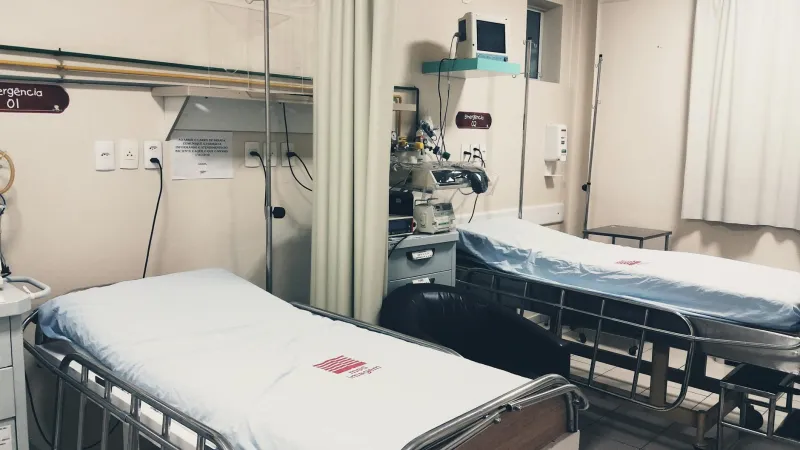
Today's emergency department would be unrecognizable to a 1950s doctor. Walk into any major American hospital's ER, and you'll find a system that's been refined to save lives with mechanical precision.
Patients are triaged within minutes by nurses trained to instantly assess severity. The most critical cases go straight to trauma bays equipped with everything from blood warmers to portable X-ray machines. Emergency physicians can perform procedures that would have required major surgery sixty years ago — inserting breathing tubes, restarting hearts, even performing emergency surgery.
The ambulance that picks you up isn't just transportation anymore. Today's paramedics can start IVs, administer powerful medications, and perform procedures that stabilize patients before they ever reach the hospital. Some ambulances are essentially mobile emergency rooms, equipped with cardiac monitors, ventilators, and even ultrasound machines.
The Numbers That Tell the Story
The statistics are staggering. In 1960, if you had a heart attack, you had about a 30% chance of surviving. Today, that number is closer to 90%. Trauma deaths — from car accidents, falls, and other injuries — have dropped by more than half since the 1970s, even as the population has grown and people take more risks.
A broken femur, which in 1950 meant months in bed and often permanent disability, now typically means surgery within hours and walking within days. Burns that would have been fatal are now survivable. Strokes that would have meant certain death or disability can be treated with medications that actually reverse brain damage — but only if treatment begins within hours.
The System We Built Without Realizing It
What's remarkable is how recently this all happened. The first emergency medicine residency program started in 1970. The American College of Emergency Physicians was founded in 1968. The modern trauma center system didn't really exist until the 1980s.
This means that if you're over fifty, you were born into a world where a medical emergency was largely a matter of luck — luck that the right doctor was available, luck that you were near a good hospital, luck that your injury wasn't too complex for the available treatment.
Today, we take for granted that medical help is always available, that ambulances will come quickly, and that emergency rooms are staffed by people who know exactly what they're doing. We complain about waiting times and insurance coverage, forgetting that the existence of this entire system is a recent miracle.
The next time you see an ambulance racing down the street or pass by a hospital's emergency entrance, remember: this whole apparatus — the trained paramedics, the specialized equipment, the doctors who've spent years learning to save lives in crisis — barely existed when your parents were young. We built a system that routinely performs miracles, and we did it so recently that many of the people who created it are still working today.