Walk through any American office building at 12:30 PM and you'll find a peculiar scene: people hunched over keyboards, unwrapping sad sandwiches between emails, scarfing down protein bars during conference calls, or skipping the meal entirely because there's "just too much to do."
Fifty years ago, that same building would have been nearly empty.
When Lunch Was Sacred
From roughly 1920 to 1980, the lunch hour was one of America's most inviolate institutions. Not the lunch "break" or the lunch "period"—the lunch hour. Sixty full minutes when the business world simply stopped.
Factories shut down their production lines. Office buildings emptied out like fire drills. Downtown restaurants filled with waves of workers who had somewhere to be, someone to meet, and an entire hour to spend doing nothing but eating and talking.
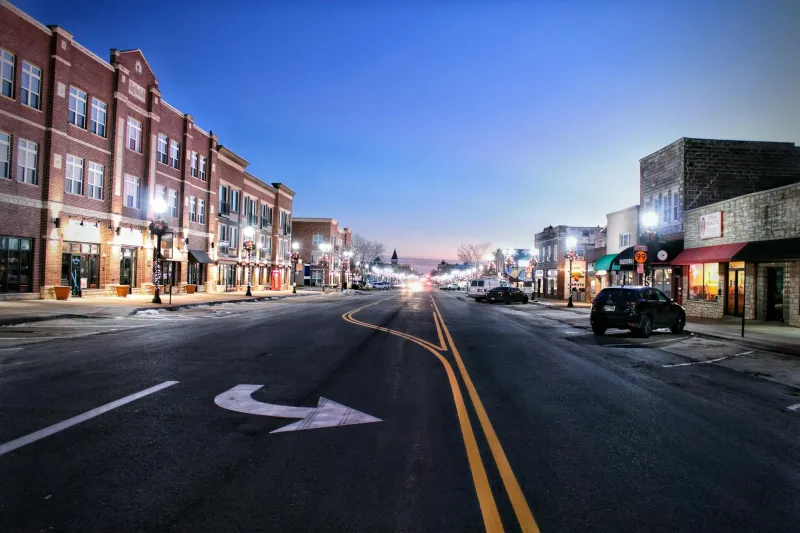
The ritual was so embedded in American life that cities planned around it. Chicago's Loop district was designed with the assumption that tens of thousands of workers would need to walk to restaurants, eat a proper meal, and walk back within an hour. Detroit's downtown had over 200 lunch counters within a six-block radius of the major office buildings.
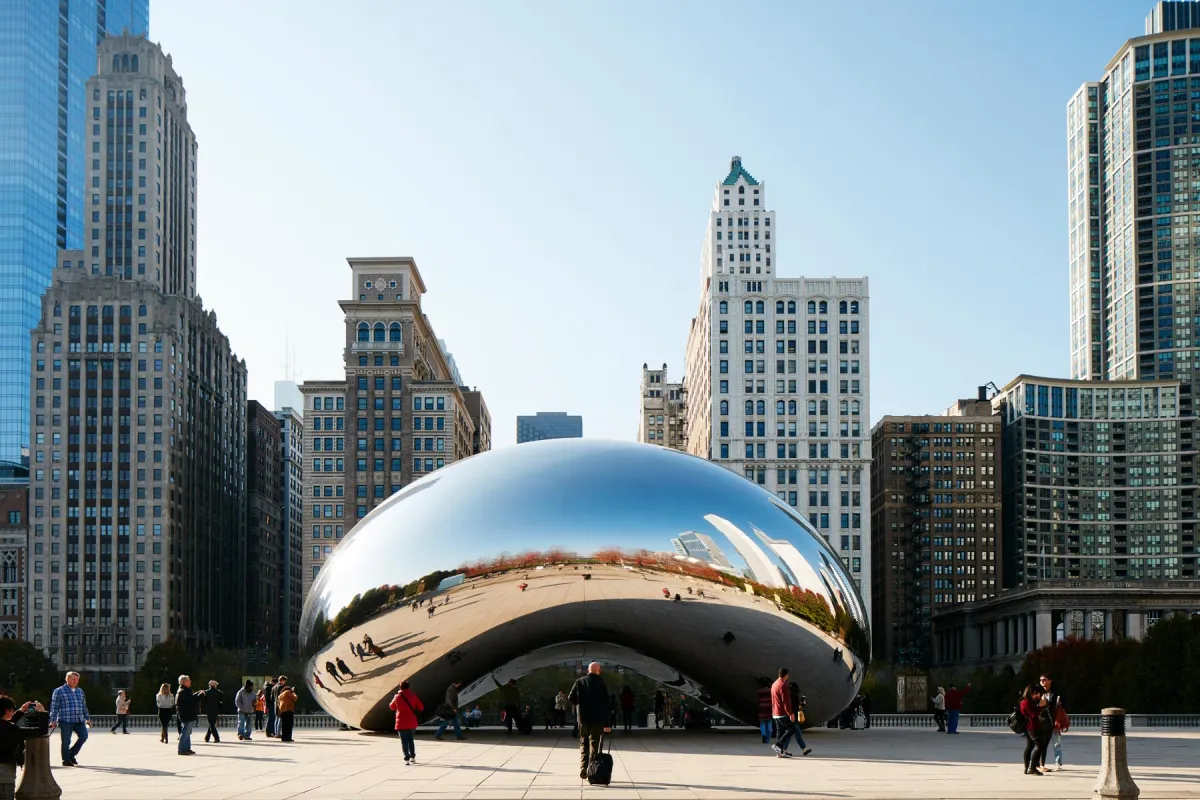 Photo: Chicago's Loop, via centralloop.s3.amazonaws.com
Lunch wasn't just about food—it was about community. Coworkers who barely spoke in the office would spend an hour every day discussing everything from politics to their kids' baseball games. Business deals were struck over soup. Romances bloomed over shared desserts. The lunch table was where the real work of building relationships happened.
The Architecture of Eating
The physical infrastructure of mid-century America was built around the assumption that workers would leave their buildings to eat. Every downtown had its ecosystem of lunch counters, cafeterias, and quick-service restaurants positioned within a comfortable walking distance of office buildings.
These weren't the grab-and-go operations we know today. They were sit-down establishments with actual waitstaff, proper plates, and the expectation that customers would linger. The average lunch lasted 45 minutes, leaving time to walk back to the office and maybe stop for a quick errand.
Department stores built their lunch counters on upper floors, knowing that office workers would combine their midday meal with a bit of shopping. Banks scheduled their busiest hours around lunch, when workers would stop in to make deposits or withdrawals. Even barber shops did their biggest business during the lunch hour.
The entire rhythm of urban life pulsed around this daily migration. Streets filled with pedestrians at noon, restaurants hit their peak capacity, and then everything slowly returned to normal by 1 PM.
The Efficiency Revolution
The death of the lunch hour didn't happen overnight. It was a slow strangulation that began in the 1980s with the rise of "efficiency culture" and accelerated through each subsequent decade.
The first blow came from corporate consultants who looked at empty offices between noon and one and saw wasted productivity. Why give workers an hour when they could eat in twenty minutes and get back to work? The Japanese model of brief, functional meals became the aspiration for American businesses looking to squeeze more output from their workforce.
Technology delivered the killing blow. Email meant that stopping work for an hour created a backlog of messages that would take another hour to clear. Cell phones ensured that even when workers did leave their desks, they remained tethered to the office. The internet made it possible to order food without leaving your chair.
The 2008 financial crisis accelerated the trend. Suddenly, taking a full hour for lunch seemed indulgent when layoffs loomed. Workers began to see the lunch break as a luxury they couldn't afford, proof of their dedication to keeping their jobs.
What We Eat Now
Today's American worker consumes lunch very differently than their 1970 counterpart. Instead of a sit-down meal with colleagues, it's often a solitary affair: a salad eaten while reading emails, a sandwich consumed during a "lunch and learn" session, or a protein bar wolfed down between meetings.
The average lunch break has shrunk from 60 minutes to 30 minutes, and many workers report taking no formal lunch break at all. Instead, they "graze" throughout the day—a handful of nuts here, a energy drink there, maybe a piece of fruit grabbed between conference calls.
The social component has almost entirely disappeared. Where lunch once served as the primary venue for workplace relationship-building, those connections now happen in brief encounters by the coffee machine or during the walk to the parking garage.
Food delivery apps have made it easier than ever to get a meal without leaving your desk, but they've also eliminated the forced break that lunch once provided. You can now eat restaurant-quality food without ever stopping work.
The Hidden Costs
The disappearance of the lunch hour represents more than just a scheduling change—it's the loss of one of the few remaining boundaries between work and life.
Research consistently shows that workers who take proper lunch breaks are more productive, more creative, and less likely to burn out. The mental reset that comes from stepping away from your desk, changing your environment, and engaging in non-work conversation appears to be essential for cognitive function.
The social costs may be even higher. The lunch hour was one of the primary ways Americans built relationships outside their immediate work teams. It was where mentoring happened, where office gossip was shared, where the informal networks that actually make organizations function were maintained.
Without the lunch hour, many workplaces have become collections of isolated individuals rather than functioning communities. The casual conversations that once happened over soup and sandwiches now rarely happen at all.
The European Alternative
Meanwhile, much of Europe has maintained the tradition of the proper lunch break. In France, the lunch hour remains sacred, with many businesses still closing from noon to 2 PM. Spanish workers take their siesta seriously. Even in efficiency-obsessed Germany, the midday meal break is protected by both law and custom.
These countries haven't suffered competitively for maintaining the lunch tradition. If anything, their workers report higher job satisfaction, lower stress levels, and better work-life balance than their American counterparts who've optimized lunch out of existence.
What We Lost
The lunch hour was never really about the food. It was about the pause—the daily ritual that reminded workers they were human beings with bodies that needed fuel, minds that needed rest, and social connections that required maintenance.
In optimizing lunch away, we've gained efficiency but lost something harder to measure: the rhythm that made work sustainable, the relationships that made offices bearable, and the simple pleasure of sitting down with other people to share a meal in the middle of the day.
Every protein bar eaten at a desk, every salad consumed during a video call, every skipped meal in the name of productivity is a small surrender in the war between human needs and corporate demands.
The lunch hour may be gone, but the hunger for what it provided—connection, pause, and the simple dignity of eating like a human being—remains.