The Great American Shutdown
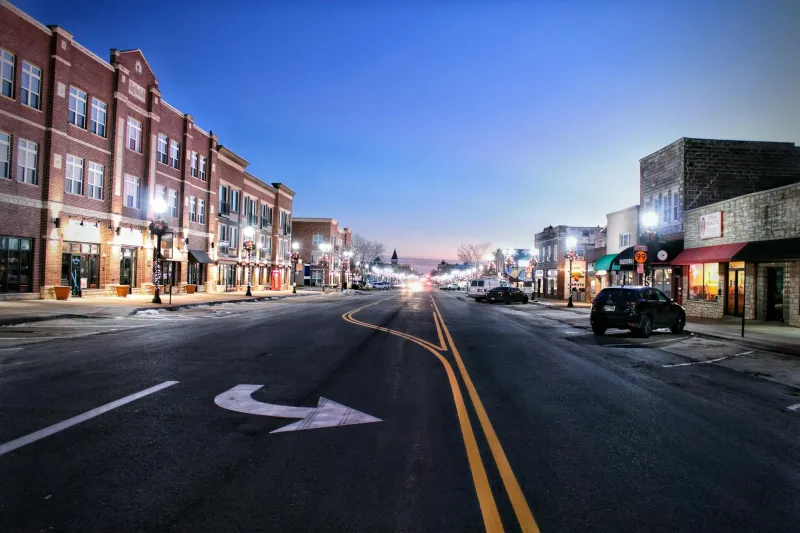
At 9 PM on a Tuesday night in 1975, downtown Akron, Ohio, looked like a ghost town. Store windows went dark. Restaurant chairs sat stacked on empty tables. The only signs of life were a few taverns, maybe a movie theater showing its last show, and the occasional police car cruising empty streets.
This wasn't unique to Akron, or to Ohio, or even to small cities. Across America, nighttime meant shutdown time. The business day ended when the sun went down, and communities settled into a predictable rhythm of evening rest that had defined American life for generations.
Walk through that same downtown today, and you'll find a completely different world. Restaurants serve dinner until midnight. Grocery stores stay open around the clock. Delivery drivers crisscross the city bringing everything from tacos to toothpaste to people who never have to leave their homes.
When Evening Entertainment Meant Staying Home
Before cable television, streaming services, and the internet, Americans had remarkably few options for nighttime entertainment outside major metropolitan areas. Television programming ended around midnight with the national anthem. Movie theaters typically showed one evening screening. Restaurants served dinner from 5 to 8 PM, then closed.
Families gathered around television sets to watch whatever the three networks decided to broadcast. Reading was a primary evening activity. Board games and conversation filled the hours between dinner and bedtime. Communities organized evening activities around churches, schools, and community centers because commercial entertainment simply wasn't available.
This wasn't a limitation—it was the natural order of things. Evening was family time, quiet time, preparation-for-tomorrow time. The idea that you might want to buy groceries at 11 PM or order dinner at midnight seemed not just unnecessary but slightly absurd.
The Economics of Early Closing
Stores closed early because staying open wasn't profitable. Before air conditioning became standard, summer evenings in many parts of the country were uncomfortably hot. Heating costs made winter nights expensive. Most importantly, there simply weren't enough customers to justify paying employees to staff empty stores.
Retail workers went home to their families. Restaurant staff cleaned up and left by 10 PM. Gas stations closed overnight, leaving only a few 24-hour locations along major highways for travelers. The idea of impulse shopping at midnight was impossible because nowhere was open to enable it.
Labor costs made extended hours prohibitively expensive for most businesses. Without the volume of customers that 24-hour operations require, the math simply didn't work. Store owners chose predictable, profitable daytime hours over speculative evening revenue.
The Industries That Never Slept
Certain businesses operated around the clock out of necessity. Hospitals, police stations, and fire departments never closed. Some manufacturing plants ran multiple shifts. Truck stops along interstate highways served long-haul drivers. Radio stations broadcast overnight programming, though often with skeleton crews and pre-recorded shows.
But these were exceptions that proved the rule. The vast majority of American commerce happened between sunrise and sunset, with a brief evening extension for dinner and entertainment. After 10 PM, the commercial world largely shut down.
The Transformation Begins
The shift toward 24-hour commerce didn't happen overnight. It began in the 1960s and 1970s with convenience stores that recognized opportunity in extended hours. 7-Eleven pioneered the concept of staying open when everyone else closed, initially targeting shift workers and late-night travelers.
Fast food restaurants gradually extended their hours, first staying open until midnight, then later, then eventually around the clock. McDonald's led this transformation, recognizing that late-night customers—often young people with disposable income—represented an underserved market.
The real catalyst was demographic change. As more women entered the workforce and dual-income families became common, traditional shopping hours became inconvenient. People needed groceries after work, wanted dinner options beyond cooking at home, and valued the flexibility of shopping on their own schedules.
Technology Enables the Night Shift
Several technological advances made 24-hour operations practical. Improved security systems reduced the risks of staying open overnight. Better lighting made parking lots and storefronts safer. Air conditioning and heating became more efficient and affordable, making it economical to maintain comfortable temperatures around the clock.
Credit cards and eventually electronic payment systems reduced the need to handle large amounts of cash overnight. Automated inventory systems helped businesses track products and restock efficiently. These technologies didn't create the demand for extended hours, but they made meeting that demand profitable.
The Always-On Economy Takes Hold
By the 1990s, extended hours had become competitive necessities rather than innovative experiments. Walmart's 24-hour Supercenters forced competitors to match their availability. Grocery chains that had traditionally closed at 9 PM found themselves staying open until midnight, then around the clock.
The internet accelerated this transformation by creating customer expectations of constant availability. If you could shop online at 2 AM, why shouldn't physical stores be open too? E-commerce didn't just compete with traditional retail—it redefined customer expectations about when commerce should be available.
The Gig Economy Completes the Circle
Today's delivery economy represents the logical endpoint of the always-on transformation. DoorDash, Uber Eats, and similar services mean that restaurants can serve customers even after their dining rooms close. Grocery delivery services mean you can shop for food without ever entering a store. The night shift economy now includes thousands of drivers, delivering everything from meals to medicine to people who never have to leave their homes.
This represents a fundamental change in how Americans experience time. The traditional rhythm of work-day commerce and evening rest has been replaced by constant availability. You can buy almost anything, at almost any time, often without leaving your house.
What We Gained and Lost
The transformation from a nation that closed at sunset to one that never stops has brought undeniable benefits. Working parents can grocery shop after their children are in bed. Shift workers can access services that fit their schedules. Emergency needs—from medicine to food to transportation—can be met immediately.
But we've also lost something valuable. The forced downtime that came with everything closing created space for family interaction, community connection, and personal reflection. When stores closed and entertainment options disappeared, people turned to each other for conversation and connection.
The always-on economy offers unprecedented convenience, but it also creates unprecedented pressure. When everything is available all the time, the boundaries between work time and personal time, shopping time and rest time, become increasingly blurred.
The New American Night
Today's American night buzzes with commercial activity that would have seemed impossible to previous generations. Delivery drivers navigate streets lit by the glow of 24-hour businesses. Customers order dinner at midnight and groceries at dawn. The night shift economy employs millions of people serving the needs of a society that has learned to never stop consuming.
We've traded the predictable rhythms of a nation that went to sleep for the constant availability of a country that never closes. Whether that represents progress or loss depends largely on what you value more: convenience or community, availability or rest, choice or simplicity.
What's certain is that we've fundamentally changed the relationship between time and commerce in ways that previous generations couldn't have imagined. The town that died at 9 PM has been replaced by a nation that never sleeps—and never stops shopping.