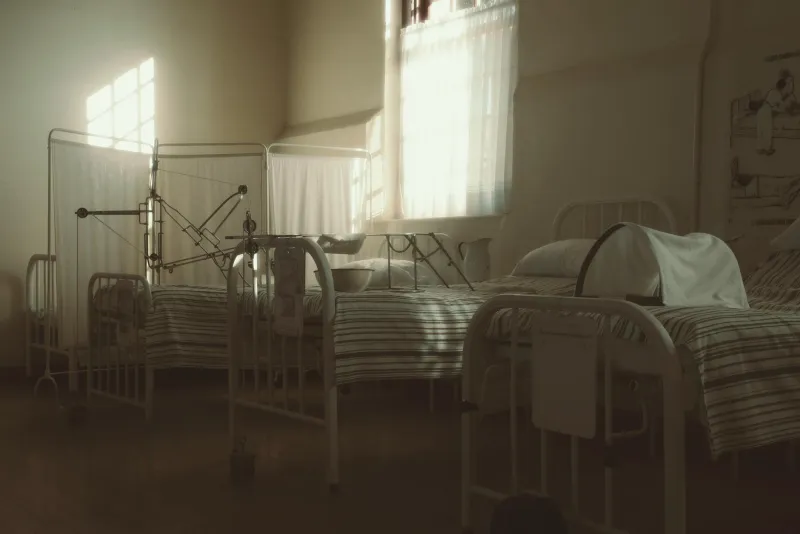
In 1900, pregnancy announcements carried an undercurrent of dread that modern Americans can barely comprehend. For every 100 women who gave birth, one wouldn't live to hold her baby. Of every 10 infants born, one would never see their first birthday. Childbirth wasn't just a joyous occasion — it was a calculated gamble with death itself.
Today, when a woman in labor arrives at an American hospital, she faces maternal mortality odds of roughly 1 in 5,000. Her baby's chance of survival has improved even more dramatically. What happened between then and now represents one of the most stunning medical transformations in human history.
The Brutal Reality of Early Childbirth
In the early 1900s, most American women gave birth at home, attended by midwives or family members with little formal training. The concept of sterile conditions was barely understood, and basic medical interventions that we consider routine today simply didn't exist.
Childbed fever — what we now know as puerperal sepsis — stalked maternity wards and birthing rooms across the country. This infection, caused by bacteria entering through the birth canal, killed women days or weeks after seemingly successful deliveries. The medical establishment of the time had no understanding of germs, let alone antibiotics to fight them.
Hemorrhaging during or after delivery was essentially a death sentence. Without blood banks, transfusion techniques, or even a basic understanding of blood types, women who lost significant amounts of blood simply bled to death. Obstructed labor, breech presentations, and other complications that modern obstetrics handles routinely often proved fatal for both mother and child.
The numbers paint a stark picture: in 1915, the United States had a maternal mortality rate of 608 deaths per 100,000 births. For comparison, today's rate hovers around 17 per 100,000 — and even that figure, while higher than other developed nations, would have seemed miraculous to earlier generations.
The Germ Theory Revolution
The first breakthrough came from an unlikely source: a Hungarian doctor named Ignaz Semmelweis, whose observations in the 1840s about handwashing were initially ridiculed by the medical establishment. It took decades for his insights about antiseptic practices to gain acceptance, but when they did, the impact on childbirth was immediate and dramatic.
 Photo: Ignaz Semmelweis, via www.shutterstock.com
By the 1920s, American hospitals began implementing basic sanitary procedures. Doctors started washing their hands before deliveries, sterilizing instruments, and maintaining cleaner environments in maternity wards. These simple changes alone cut maternal mortality rates in half within a decade.
The shift from home births to hospital deliveries accelerated this progress. While only 5% of American women gave birth in hospitals in 1900, that figure rose to 50% by 1938 and 95% by 1955. This transition meant that when complications arose, trained medical professionals and proper equipment were immediately available.
The Antibiotic Miracle
Perhaps no single medical advance transformed childbirth more dramatically than the introduction of antibiotics in the 1940s. Penicillin, in particular, turned previously fatal infections into treatable conditions. Childbed fever, which had terrorized new mothers for centuries, became largely preventable and entirely curable.
The impact was swift and measurable. Between 1940 and 1950, maternal mortality rates dropped by more than 70%. What had been medicine's most dangerous routine procedure became exponentially safer almost overnight.
Antibiotics also revolutionized cesarean sections, which had been performed since ancient times but with survival rates so poor they were considered last-resort procedures. With the ability to prevent and treat post-surgical infections, C-sections became viable alternatives for complicated deliveries, saving countless mothers and babies who would have died in earlier eras.
Blood Banking and Transfusion Technology
The development of blood banking during World War II created another crucial safety net for birthing mothers. For the first time in human history, women experiencing severe hemorrhaging during childbirth could receive immediate blood transfusions, turning what had been a death sentence into a manageable medical event.
 Photo: World War II, via meaningss.com
The discovery of blood types and compatibility testing meant these transfusions could be performed safely. Coupled with improved surgical techniques for addressing bleeding complications, maternal deaths from hemorrhaging plummeted throughout the 1940s and 1950s.
Monitoring and Prevention
Modern prenatal care represents another revolutionary change that would astound earlier generations. The ability to monitor fetal development through ultrasounds, detect potential complications through blood tests, and track the baby's health during labor through electronic fetal monitoring has transformed pregnancy from a months-long period of uncertainty into a carefully managed medical process.
Conditions like preeclampsia, which once struck without warning and proved frequently fatal, can now be detected early and managed through medication and careful monitoring. Gestational diabetes, Rh incompatibility, and dozens of other complications that once spelled disaster are now routine parts of prenatal care.
The NICU Revolution
Perhaps nowhere is medical progress more visible than in neonatal intensive care units. Babies born prematurely or with serious health complications who would have had no chance of survival in 1900 now routinely grow up healthy and normal.
The development of mechanical ventilators for newborns, incubators that can precisely control temperature and humidity, and specialized nutrition for premature infants has pushed the boundaries of viability to extraordinary limits. Babies born at 24 weeks gestation — barely past the halfway point of pregnancy — now have survival rates above 50%.
Pain Management Progress
While not directly related to survival, the evolution of pain management during childbirth represents another dramatic improvement in the birthing experience. From the introduction of ether in the 1840s to modern epidural anesthesia, women have gained options that their grandmothers couldn't have imagined.
This progress has been accompanied by a cultural shift that recognizes pain relief during childbirth as a legitimate medical choice rather than a sign of weakness or moral failing.
The Numbers Today
Modern American childbirth statistics would seem like science fiction to women from a century ago. Today's maternal mortality rate, while higher than in some developed countries due to various socioeconomic factors, is still 97% lower than it was in 1900. Infant mortality has declined even more dramatically — from roughly 100 deaths per 1,000 births in 1900 to fewer than 6 per 1,000 today.
Complications that once proved universally fatal are now managed routinely. Breech presentations, umbilical cord prolapse, placental abruption, and severe preeclampsia — all conditions that would have meant certain death for mother or baby in 1900 — are now handled with surgical precision and pharmaceutical intervention.
What We Take for Granted
For modern American women, the expectation is that both mother and baby will survive childbirth healthy and intact. This assumption — so fundamental to how we view pregnancy and family planning — would have been unthinkably optimistic to earlier generations.
The transformation of childbirth from life's most dangerous gamble to medicine's most routine miracle represents more than just technological progress. It reflects a fundamental shift in human experience, allowing families to welcome new life with joy rather than terror, and women to embrace motherhood without writing their wills.
In an era when medical costs and healthcare access dominate policy discussions, it's worth remembering just how far we've traveled from the days when bringing life into the world meant rolling the dice with death itself.