When Tomorrow's Weather Was Anyone's Guess: How Americans Learned to Trust the Sky
In March 1993, a massive blizzard buried the Eastern United States under several feet of snow, stranding travelers from Georgia to Maine and killing more than 270 people. But here's what made this storm different from countless others throughout American history: meteorologists saw it coming five days in advance and tracked its every movement with unprecedented precision.
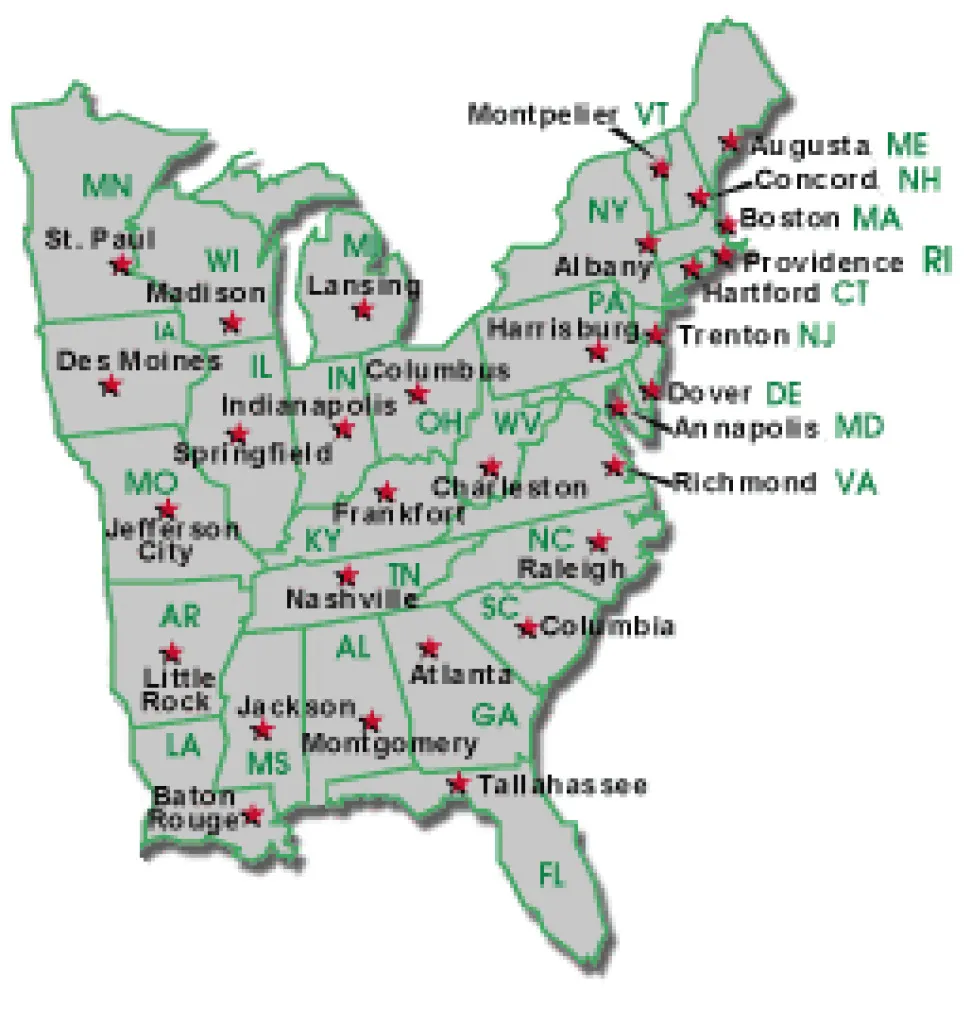 Photo: Eastern United States, via printablemapofusa.com
Fifty years earlier, the same storm would have been a complete surprise until it was already dumping snow on your doorstep. The transformation of weather forecasting from educated guesswork to near-scientific precision represents one of the most underappreciated revolutions in modern American life—one that has fundamentally changed how we plan, travel, work, and even think about the future.
The Era of Meteorological Gambling
Picture the weather forecaster of 1960: a man in a suit standing in front of a hand-drawn map, pointing at crude symbols representing high and low pressure systems. His forecast extended maybe three days into the future, and even tomorrow's weather was essentially a sophisticated guess based on current conditions and historical patterns.
The tools available were primitive by today's standards. Weather balloons carried basic instruments into the atmosphere twice daily. Ships at sea radioed back occasional observations. A scattered network of ground stations recorded temperature, pressure, and precipitation. But vast areas of the planet—especially the oceans, where many weather systems originate—were essentially invisible to forecasters.
This created a culture of meteorological humility. Farmers planted crops based on historical averages and prayer. Airlines routinely delayed or canceled flights due to unexpected weather. Families planning outdoor weddings had backup plans for their backup plans, because even a sunny morning offered no guarantee about the afternoon.
When Weather Could Destroy Your Life Overnight
The consequences of poor forecasting were often devastating. The Dust Bowl of the 1930s was exacerbated by farmers' inability to predict drought conditions more than a few days ahead. Hurricane Camille in 1969 killed 259 people partly because coastal residents had no reliable advance warning of its intensity.
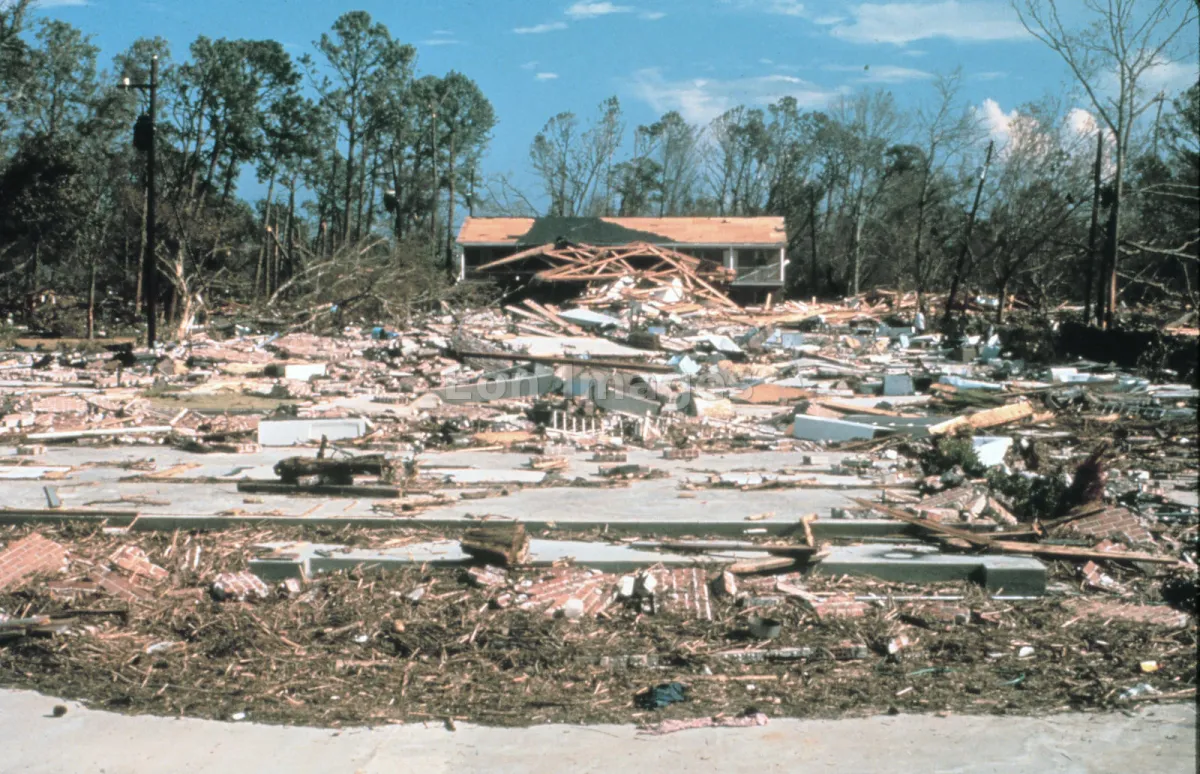 Photo: Hurricane Camille, via d3e1m60ptf1oym.cloudfront.net
Commercial aviation was particularly vulnerable. Pilots routinely flew into unexpected turbulence, storms, or fog that modern forecasting would have predicted days in advance. The phrase "VFR into IMC"—Visual Flight Rules into Instrument Meteorological Conditions—became aviation shorthand for weather-related disasters that claimed hundreds of lives annually.
Even everyday planning became an exercise in risk management. Beach trips were gambles. Outdoor events required expensive backup venues. Construction projects built weather delays into every timeline because there was no reliable way to predict when conditions would be suitable for work.
The Satellite Revolution
The transformation began in space. The first weather satellite, TIROS-1, launched in 1960, sent back grainy black-and-white images that revealed cloud patterns across entire continents. For the first time in human history, meteorologists could actually see weather systems developing over the oceans, tracking storms from birth to death.
But the real breakthrough came with geostationary satellites in the 1970s, which provided continuous monitoring of the same geographic area. Suddenly, forecasters could watch weather systems evolve in real-time, like viewing a slow-motion movie of the atmosphere.
These satellites revealed patterns and behaviors that ground-based observations had missed entirely. Meteorologists discovered that small changes in ocean temperatures could influence weather patterns thousands of miles away. They began to understand the jet stream not as a simple river of air, but as a complex, meandering system that drove weather across entire continents.
The Computer Revolution
But satellites alone weren't enough. The atmosphere is a chaotic system where tiny changes can have massive consequences—the famous "butterfly effect" that makes weather inherently difficult to predict. The breakthrough came with supercomputers capable of processing millions of calculations per second.
By the 1980s, computer models began ingesting data from thousands of sources—satellites, weather balloons, ground stations, aircraft, ships—and running complex mathematical simulations of atmospheric behavior. These models could project weather patterns days or even weeks into the future with accuracy that would have seemed magical to previous generations.
The National Weather Service's supercomputer in the 1990s could perform more calculations in one second than all the meteorologists in history had done by hand. Today's weather models process petabytes of data and can predict specific conditions for individual neighborhoods a week in advance.
The Psychology of Predictable Weather
This transformation has quietly revolutionized American life in ways we rarely consider. Modern agriculture depends on precise forecasting to optimize planting, irrigation, and harvesting. Airlines save millions of dollars annually by routing flights around storms that haven't even formed yet. Emergency management officials can evacuate entire cities based on hurricane tracks predicted days in advance.
But perhaps more importantly, accurate forecasting has changed how Americans think about the future. We've become accustomed to knowing what tomorrow will bring, at least meteorologically. The weather app on your phone provides more accurate information than the best meteorologist of 1970 could have dreamed of producing.
This predictability has made us more efficient but perhaps less adaptable. When flights are delayed by weather, passengers become frustrated in ways that would have seemed unreasonable to travelers of the 1960s, who understood that weather was fundamentally unpredictable. We've gained the ability to plan with precision but may have lost some of our ancestors' ability to adapt when plans inevitably change.
The Limits of Prediction
Despite all these advances, weather forecasting remains an inexact science. The atmosphere is still chaotic, and small uncertainties can still compound into large errors over time. A seven-day forecast today is about as accurate as a three-day forecast was in 1980—impressive progress, but still far from perfect.
Climate change has also introduced new challenges. Historical weather patterns, which formed the foundation of traditional forecasting, are becoming less reliable as the climate shifts. Meteorologists are essentially trying to predict the behavior of a system that's changing even as they study it.
When Knowing the Future Became Routine
The next time you check your weather app and confidently plan outdoor activities five days in advance, remember that you're exercising a superpower that didn't exist for most of human history. Your great-grandparents lived in a world where tomorrow's weather was genuinely unknowable, where planning ahead meant accepting uncertainty as a fundamental part of life.
We've gained the ability to see into the meteorological future with unprecedented clarity, transforming everything from agriculture to aviation to weekend barbecue plans. But in learning to trust our forecasts, we may have forgotten the deeper lesson that weather once taught: that some aspects of the future will always remain beyond our control, no matter how sophisticated our tools become.
The sky may no longer be able to surprise us quite as often, but it can still humble us—and perhaps that's exactly as it should be.