When a Wedding Was Just a Saturday: The Quiet Ceremony America Left Behind
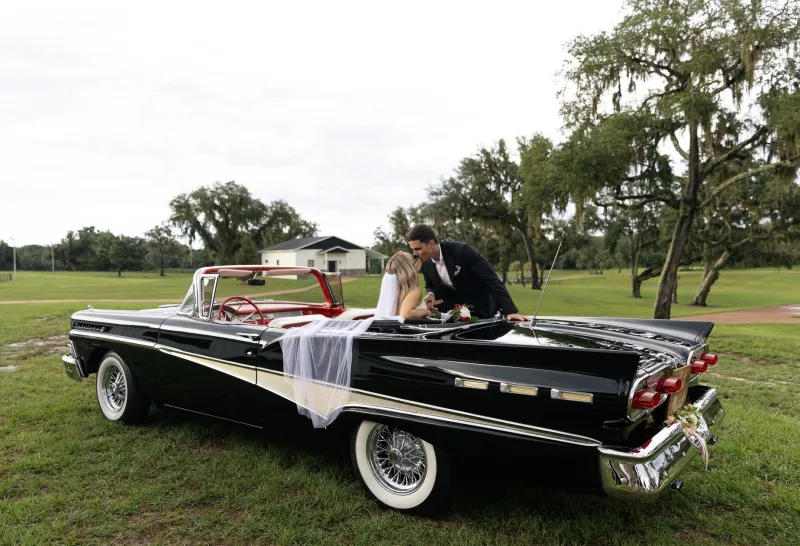
Look at the wedding photos from your grandparents' generation and something stands out immediately — not the fashions, not the black-and-white film, but the scale. A few dozen guests in their Sunday best. A church hall or a backyard. A sheet cake. Someone's uncle with a camera. The whole event wrapped up in time for an early dinner.
Now open Instagram. The contrast is hard to overstate.
The Modest Beginning
For most of American history, weddings were intimate by necessity and by culture. Through the 1950s and into the 1960s, the average wedding guest list hovered around fifty people. The ceremony itself was typically held at a local church or family home, catered by relatives and neighbors rather than a professional event team. The bride's dress was often sewn at home or rented. The honeymoon, if there was one, might be a long weekend two towns over.
None of this was considered a compromise. It was just what a wedding looked like.
The economics made anything larger impractical for most families. Median household incomes in the 1950s wouldn't stretch to cover a 200-person sit-down dinner, a professional photographer, a DJ, a florist, a wedding planner, and a venue deposit. So people didn't try. They invited the people they actually knew, served food they actually cooked, and called it a marriage.
What they got, almost accidentally, was something that felt genuinely personal. Because it was.
The Inflation of Expectation
The transformation didn't happen overnight. It was gradual, driven by a confluence of forces that individually seemed reasonable but collectively changed the entire meaning of the event.
The wedding industry — and it is very much an industry — grew dramatically through the 1980s and 1990s. Bridal magazines multiplied. Television programming began featuring elaborate celebrity ceremonies as aspirational content. The concept of the "dream wedding" entered the cultural vocabulary and quietly became a benchmark against which real weddings were measured.
At the same time, rising dual-income households gave couples more spending power, and the social pressure to spend it on a wedding intensified accordingly. Credit became more accessible. Destination venues marketed themselves aggressively. The guest list crept upward as family expectations expanded — not just immediate relatives, but extended family, coworkers, college friends, childhood neighbors whose parents would be offended not to receive an invitation.
The average cost of an American wedding today sits somewhere between $30,000 and $35,000, according to industry surveys. In major metro areas, that number climbs considerably higher. That's not including engagement rings, rehearsal dinners, bachelor and bachelorette events, or the bridal party expenses that guests are increasingly expected to absorb.
To put that in perspective: the average American wedding now costs more than a year of in-state college tuition at most public universities.
The Production Creep
What's particularly striking isn't just the cost — it's the complexity. Modern weddings routinely involve vendors that simply didn't exist as a category forty years ago.
Professional wedding planners. Engagement photographers (separate from wedding photographers). Videographers who produce cinematic highlight reels. Custom invitation designers. Hair and makeup artists booked months in advance. Photo booths. Hashtags. Drone footage. Seating chart software. Shuttle buses between the ceremony and the reception venue.
Multi-day events have become increasingly common. The rehearsal dinner has expanded from a small family gathering into a full-scale event of its own. Post-wedding brunches are now practically expected. Destination weddings — once reserved for the genuinely wealthy — have gone mainstream, asking guests to commit not just to a Saturday afternoon but to an entire long weekend, plus airfare.
Somewhere along the way, the wedding stopped being a ceremony that launched a marriage and became an event that required its own project management.
What the Numbers Don't Show
The financial story is striking enough. But there's a human dimension to this shift that gets less attention.
When a wedding involves 200 guests, a significant percentage of them are, by definition, people the couple doesn't know particularly well. The intimacy of the day — the sense that you are surrounded by people who genuinely love you — gets diluted by obligation. You spend your own wedding making small talk with your father's business associate and your college roommate's plus-one.
The stress load has also changed dramatically. Couples who married in the 1960s rarely reported their wedding as one of the most stressful experiences of their lives. Today, it routinely ranks among the top stressors young Americans face — on par with moving, job changes, and financial hardship. The irony is that the event designed to celebrate a relationship often puts that relationship under its greatest strain before the marriage even begins.
There's also the debt dimension. A growing number of American couples begin their marriages carrying wedding debt — sometimes significant amounts financed on credit cards or personal loans. Starting a shared financial life with a four- or five-figure deficit, incurred for a single day, is a genuinely strange foundation that previous generations largely avoided by accident.
The Quiet Pushback
Not everyone is buying in. There's a small but growing counter-movement of couples choosing courthouse ceremonies, micro-weddings of under twenty guests, or backyard gatherings that deliberately echo the simplicity of an earlier era. Elopements — once considered a social embarrassment — have been rebranded as romantic and intentional.
Some of this is economic necessity. But some of it is a genuine reconsideration of what the day is actually supposed to mean.
The couples who opt out of the production often describe their weddings the same way: more relaxed, more connected, more theirs. Less performance, more presence.
Which sounds, honestly, a lot like what a Saturday wedding in 1957 must have felt like — before anyone decided that wasn't enough.