
Walk into any grocery store today and try to buy a week's worth of food on nothing but a promise to pay next Friday. The cashier will look at you like you've suggested paying with seashells. But for most of American history, that's exactly how millions of people fed their families.
Before credit cards, before bank loans, before algorithms analyzed your spending patterns, there was the tab. And the tab ran on something no computer can measure: trust.
The Corner Store as Financial Institution
In 1950s America, nearly every neighborhood had a general store or corner market where families bought everything from milk to work boots. But these weren't just retail establishments — they were informal banks, extending credit to customers based on reputation, character, and personal relationships.
Joe Marinelli ran a corner store in South Philadelphia for forty years. "I knew every family in a six-block radius," he recalls. "I knew who paid their bills, who was having a hard time, whose husband drank too much. When Mrs. O'Brien needed groceries but wouldn't get paid until Thursday, she didn't need to fill out an application. She just needed to be Mrs. O'Brien."
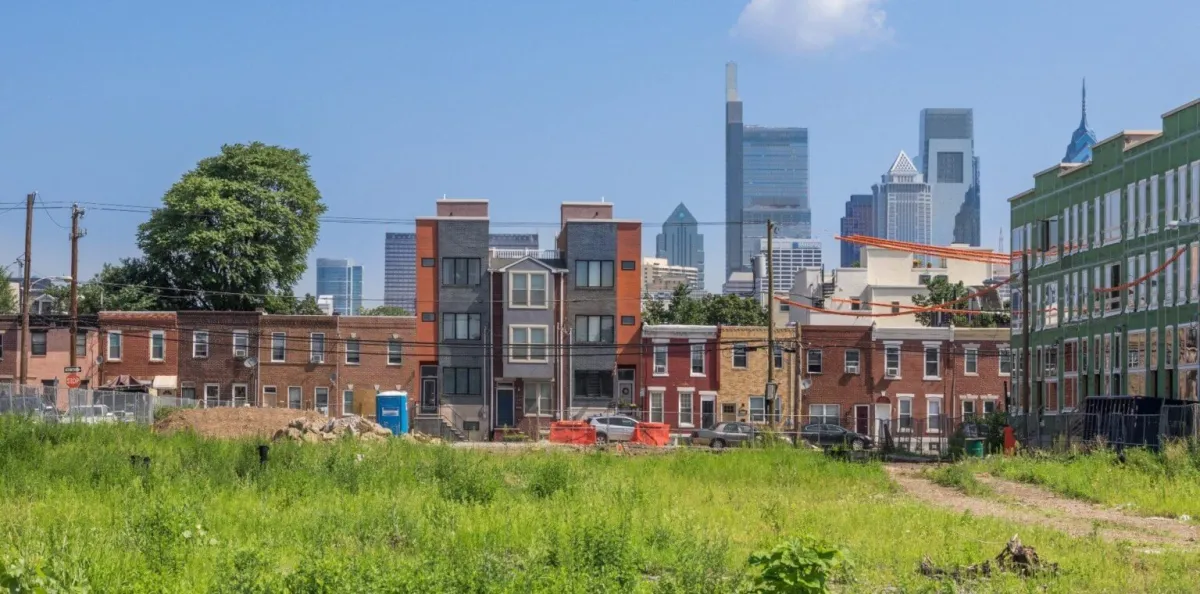 Photo: South Philadelphia, via philadelphiabeautiful.com
The system was remarkably sophisticated despite its informal nature. Storekeepers maintained mental ledgers of customer reliability. They tracked payment patterns, family circumstances, and seasonal employment cycles. A dock worker might run a tab all winter and settle up when shipping resumed in spring. A seamstress might buy fabric on credit and pay when she finished the dress.
The Mathematics of Mutual Dependence
This wasn't charity — it was sound business built on mutual dependence. Storekeepers needed loyal customers to survive competition from chain stores. Customers needed credit to smooth out the inevitable gaps between paychecks. The relationship created a financial ecosystem that kept money circulating within communities.
The numbers were staggering. A 1956 Federal Reserve study found that nearly 40% of American families regularly used store credit for basic necessities. In working-class neighborhoods, that figure often exceeded 60%. Millions of Americans lived in an economy where access to credit depended not on credit scores but on social capital.
Employers played banker too. Factory workers routinely borrowed against future wages for emergencies. Construction crews advanced money for tools and work clothes. Small-town employers often functioned as informal credit unions, lending money for everything from medical bills to home repairs.
The Human Algorithm
What made this system work was information — not the digital kind that feeds today's credit algorithms, but intimate human knowledge. Lenders knew their borrowers' families, their habits, their challenges. They could distinguish between someone who was temporarily short on cash and someone who was fundamentally unreliable.
Mary Kowalski, whose family ran a bakery in Detroit's Polish district, explains the logic: "You didn't need to check someone's credit score when you'd known them since they were five years old. You knew if their father was a good man, if their mother raised them right, if they showed up to work every day. That told you everything you needed to know about whether they'd pay you back."
The system had its own enforcement mechanisms. Defaulting on a store tab didn't just hurt your credit — it hurt your reputation in the community. In small towns and tight-knit urban neighborhoods, word traveled fast. A reputation for not paying debts could affect everything from job prospects to marriage opportunities.
When Computers Replaced Character References
The transformation began in the 1960s with the rise of credit cards and computerized lending. Banks could suddenly extend credit to strangers based on statistical models rather than personal relationships. A factory worker in Detroit could get a loan from a bank in Delaware without the two institutions ever meeting.
Credit scoring, introduced by Fair Isaac Corporation in 1956 but not widely adopted until the 1980s, promised to democratize lending by removing human bias and subjectivity. No longer would access to credit depend on knowing the right people or living in the right neighborhood.
 Photo: Fair Isaac Corporation, via tickertable.com
The benefits were real. Credit cards provided convenience and financial flexibility that store tabs never could. Computerized lending expanded access to homeownership and higher education. People could move freely without losing their financial relationships.
What the Algorithms Couldn't Capture
But something was lost in translation. The old system, for all its limitations, operated with nuance that no algorithm can replicate. A storekeeper might extend credit to a struggling single mother because he knew she was taking night classes to become a nurse. A local banker might approve a loan for a young man starting a business because his grandfather was known as an honest man.
The human-based credit system also kept money circulating locally. When families bought groceries on credit from neighborhood stores, the economic benefits stayed in the community. Store owners hired local workers, bought from local suppliers, and reinvested profits locally.
Today's credit system, efficient as it is, extracts wealth from communities and concentrates it in distant financial centers. Credit card interest flows to banks thousands of miles away. Payday loans drain resources from the neighborhoods that can least afford it.
The Social Cost of Financial Efficiency
Perhaps most importantly, the old system created relationships that extended beyond mere financial transactions. The grocer who extended credit also provided financial advice, connected customers with job opportunities, and served as a bridge between immigrant families and American economic life.
These relationships created social capital that strengthened communities. When everyone in the neighborhood had a stake in each other's financial success, people looked out for each other in ways that went far beyond money.
The Ghost Networks
Traces of the old system survive in unexpected places. Immigrant communities still operate informal lending circles. Small-town banks occasionally make character-based loans. Some ethnic grocery stores still extend credit to trusted customers.
But these are exceptions in a financial system that has largely moved beyond human judgment. Today's lending decisions are made by algorithms that can process millions of applications but can't account for the fact that someone's father was a good man or that they've never missed a Sunday at church.
The transformation from handshake lending to algorithmic credit represents more than just technological progress. It marks the shift from an economy built on personal relationships to one built on data points. We gained efficiency, convenience, and scale. But we lost something harder to quantify: the financial intimacy that once bound communities together.
In a world where your credit score matters more than your character, and where financial relationships exist only as long as the monthly payments clear, it's worth remembering that there was once another way. A way where your word was your bond, your reputation was your collateral, and your grocer was also your banker.