When Your Piggy Bank Actually Paid You: The Golden Age of Saving Money
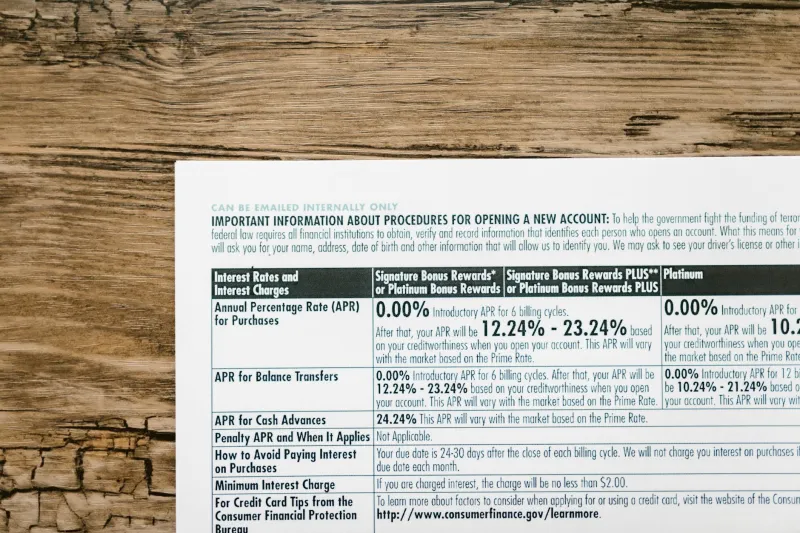
In 1981, you could walk into any bank in America, deposit your paycheck into a regular savings account, and earn 12% interest. Not a special promotional rate. Not a high-risk investment. Just the standard reward for the simple act of saving money.
Today, that same savings account pays 0.01%.
This isn't just a number that changed—it's the collapse of an entire economic philosophy that once made saving money a genuine wealth-building strategy for ordinary Americans.
The Savings Account as Money Machine
For most of the 20th century, American savers enjoyed something that seems almost mythical today: meaningful interest rates on basic bank deposits. From the 1950s through the early 1980s, savings accounts regularly paid 4% to 8% annually. Certificate of deposits offered even more—sometimes reaching double digits.
This meant something profound: you could get richer just by being patient. A family earning $50,000 annually could deposit $5,000 in savings and watch it grow to $5,400 by year's end without lifting a finger. Compound that over a decade, and you had a serious nest egg built from nothing more exotic than showing up at the bank.
The math was simple enough for anyone to understand. Put money in, get more money back. No stock picking, no market timing, no financial advisors needed. The bank paid you to let them use your money, and everyone understood the deal.
When Retirement Planning Was Automatic
Those interest rates meant that basic saving was actually a retirement strategy. A worker who consistently saved 10% of their income in simple bank accounts could reasonably expect to retire comfortably. The money grew steadily, predictably, and safely.
Consider this: $100 saved monthly at 6% interest becomes $100,000 in about 30 years. At 8%, it reaches $150,000. These weren't get-rich-quick schemes—they were get-rich-slow plans that actually worked.
Senior citizens could live off interest income without touching their principal. A retiree with $100,000 in savings earning 8% could collect $8,000 annually just for owning money. That was enough to cover many basic living expenses, providing real financial security in old age.
The Federal Reserve's Great Experiment
The transformation began in the early 1980s when Federal Reserve Chairman Paul Volcker deliberately crashed interest rates to break the back of inflation. This was supposed to be temporary medicine for a sick economy. Four decades later, we're still taking the medicine.
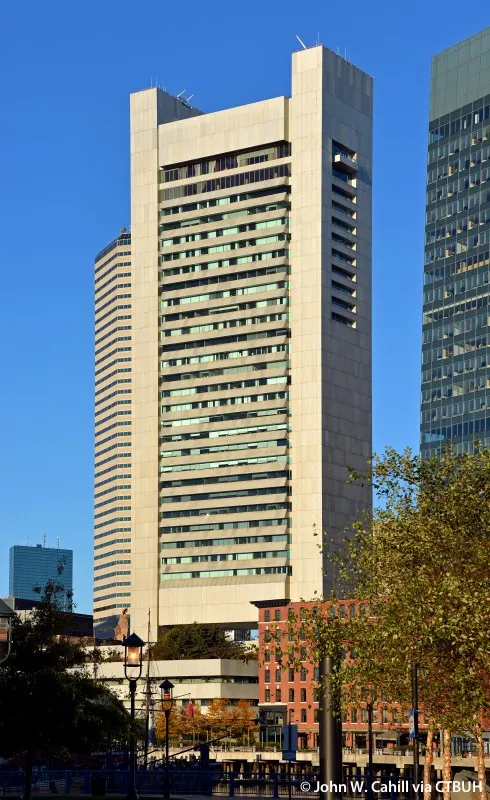 Photo: Federal Reserve, via images.skyscrapercenter.com
 Photo: Paul Volcker, via s.wsj.net
Subsequent Fed chairs continued pushing rates lower, believing that cheap money would stimulate economic growth. And it worked—for asset owners. Stock markets soared, real estate prices climbed, and anyone who owned investments got richer. But savers got crushed.
The Fed's zero interest rate policy, once considered an emergency measure, became the new normal. Today's savers earn less on their deposits than they lose to inflation, meaning that the simple act of saving money now guarantees you'll get poorer over time.
The Great Migration to Risk
Faced with savings accounts that pay nothing, ordinary Americans have been forced into investments they don't understand and risks they never wanted to take. Retirees who once lived comfortably on bond interest now chase dividend stocks. Young workers who would have been content building wealth slowly through savings now feel compelled to day-trade cryptocurrency.
The 401(k) system, originally designed as a supplement to pensions and Social Security, became the primary retirement vehicle precisely because traditional savings stopped working. Americans were essentially told: "If you want your money to grow, you'll need to gamble in the stock market."
This wasn't a choice most people wanted to make. Surveys consistently show that Americans prefer the safety and predictability of savings to the volatility of investments. But when savings accounts pay effectively nothing, there is no choice.
The Psychological Shift
The collapse of savings account returns changed more than just financial planning—it changed how Americans think about money itself. Previous generations learned patience and delayed gratification because saving money was rewarded. Today's Americans have learned that patience is punished and only risk-taking is rewarded.
This shift helps explain everything from the rise of day trading apps to the cryptocurrency boom to the housing speculation that drives prices beyond reasonable levels. When safe investments pay nothing, speculation becomes rational.
The old virtue of thrift—living below your means and saving the difference—became economically obsolete. Why save money that loses purchasing power when you could buy assets that might appreciate? The prudent saver became the economic fool.
What We Lost Beyond the Interest
Meaningful savings rates provided more than just investment returns—they provided financial education and stability. When your savings account balance grew noticeably each month, you learned viscerally about compound interest, delayed gratification, and the power of consistency.
Children could open savings accounts and watch their birthday money grow, learning lessons about money that no classroom could teach. Today's kids see their savings earn pennies and learn instead that money sitting still is money wasted.
The predictability of savings returns also provided psychological comfort that's hard to quantify. Knowing that your emergency fund was not only safe but growing provided peace of mind that investment portfolios, no matter how well-diversified, simply can't match.
The Inequality Engine
Perhaps most significantly, the death of savings account returns has become an engine of inequality. When safe investments paid meaningful returns, anyone could participate in wealth building. You didn't need investment knowledge, risk tolerance, or large initial amounts. You just needed discipline.
Today's system rewards financial sophistication and punishes financial simplicity. Those who understand markets, can tolerate volatility, and have enough money to diversify across multiple asset classes can still build wealth. Everyone else is left behind.
The family that once could have built wealth through simple savings now faces a choice: learn to invest (with all the risks that entails) or watch inflation slowly erode their purchasing power. This isn't a choice previous generations had to make.
The Path We Didn't Take
Other countries have maintained higher savings rates and different relationships between savers and their financial systems. But America chose a path that prioritized asset appreciation over saving rewards, creating an economy where only risk-takers prosper.
We gained dynamic financial markets and lost financial stability for ordinary families. We created unprecedented wealth for asset owners and unprecedented challenges for people who just wanted to save money the old-fashioned way.
The irony is profound: in an era when we have more financial products, investment options, and wealth-building tools than ever before, the simple act of saving money—the foundation of all financial security—has become economically pointless.
Your grandparents' piggy bank was a wealth-building machine. Yours is just a place to store money while it slowly loses value. That's not just a change in interest rates—it's a fundamental transformation in what it means to be financially responsible in America.