No Notifications, No Highlights, No Problem: What Sports Fandom Looked Like Before the Internet Rewired It
No Notifications, No Highlights, No Problem: What Sports Fandom Looked Like Before the Internet Rewired It
Somewhere in America right now, someone is watching a live game on their phone, checking a fantasy app on their tablet, reading real-time commentary on Twitter, and glancing at a highlights reel on a second screen — simultaneously. This is considered normal. It might even be considered a casual viewing experience.
Wind the clock back 60 years and the contrast is almost hard to process. In 1963, if you wanted to know how the Yankees did last night, you waited for the newspaper. If you missed a game, that was it — no replay, no highlight package, no podcast breaking it down the next morning. Sports existed in real time or not at all, and fandom was built around that constraint in ways that shaped an entire culture.
The Paper, the Radio, and the Patience
Before cable television, before SportsCenter, before any of it, the morning sports section was sacred. Fans read game recaps the way people now scroll feeds — slowly, with attention, absorbing every detail because it was the only version of events they'd get. Beat writers were genuinely important figures. Their accounts of a game were the game, for everyone who hadn't been in the stadium.
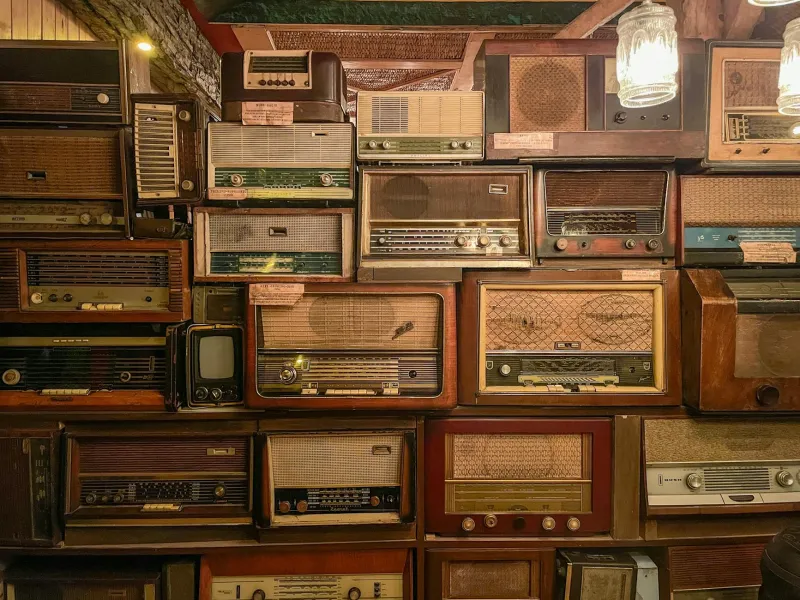
Radio carried live sports for decades before television arrived, and it created a different kind of intimacy. Listening to a baseball game on a transistor radio — Vin Scully's voice drifting across a summer evening — was a communal and imaginative experience. You built the picture in your head. Broadcasters understood this and became storytellers first, play-by-play announcers second.
Television changed things, obviously, but more slowly than people remember. Early sports broadcasts were limited, technically rough, and confined to a handful of games per week. The NFL Championship Game wasn't even televised nationally until the late 1950s. For most of the country, most of the time, following a sport meant reading about it afterward.
Three Moments That Changed Everything
Monday Night Football, 1970. When ABC debuted Monday Night Football in September 1970, it wasn't just a programming decision — it was a cultural statement. Putting football in prime time, with Howard Cosell and the booth as entertainment in their own right, told America that sports belonged in the living room, not just the sports section. Ratings were enormous. The show ran for 36 years. It proved that live sports could anchor a broadcast network and planted the seed for everything that followed.
ESPN, 1979. When ESPN launched on September 7, 1979, the concept was so unusual that most industry observers gave it months before it folded. A 24-hour cable channel devoted entirely to sports? There wasn't enough content, people said. There wasn't enough audience.
They were wrong on both counts. Within a few years, SportsCenter had become appointment viewing for a generation of fans who had never before had access to scores, highlights, and analysis on demand. The show democratized sports information in a real way — you no longer needed to live in a city with a good sports section or catch the right local newscast. Everything was there, cycling every hour, available whenever you sat down.
ESPN didn't just change how people watched sports. It changed what sports meant in American culture — turning athletes into national celebrities, fueling the rise of sports talk radio, and creating the template for the always-on sports media ecosystem that now surrounds us.
Twitter, 2006 — and Everything After. The internet had already disrupted sports media by the mid-2000s, with websites and message boards giving fans a place to discuss games in real time. But Twitter — and later Instagram, Reddit, and TikTok — collapsed the distance between event and reaction to something close to zero.
The first tweet about a major sports moment now often appears before the replay does. Athletes communicate directly with fans, bypassing the media layer entirely. A trade rumor can be reported, debated, confirmed, and memed within 20 minutes. Fandom became participatory in a way it had never been before — not just watching and reading, but reacting, arguing, creating.
What Was Lost, What Was Gained
It's tempting to frame the old way of following sports as inferior — limited information, delayed access, no highlights if you missed the game. And in a narrow sense, it was. But there's something worth examining in what that constraint produced.
When the newspaper account was the only account, it got read carefully. When a radio broadcast was the only way to follow a road game, people listened to the whole thing. Attention wasn't fragmented across five screens because there was only one source. Fandom was slower, more patient, and in some ways more deeply embedded in daily life — the box score over breakfast, the game on the radio in the garage, the argument settled by whoever had the almanac.
Today's sports fan has access to more information, more content, and more ways to engage than any previous generation could have imagined. A fan in rural Montana can watch every game their team plays, follow beat reporters in real time, and argue about lineup decisions with strangers across the country at 1 a.m. That's genuinely remarkable.
But the abundance comes with its own trade-offs. Attention is shorter. The space between an event and its analysis has shrunk to nothing. And the slow, communal rituals of following a team — the morning paper, the radio in the background — have been replaced by a firehose that never turns off.
Your grandfather knew his team's stats by heart because he'd read them a hundred times. Today's fan has access to every stat ever recorded and struggles to name the starting lineup. Progress, mostly. But a different kind of knowing.