Your Word Was Your Bond: How America Lost Faith in the Handshake Deal

Walk into any coffee shop today and you'll encounter something that would have baffled your grandfather: a digital payment screen asking you to accept terms and conditions for a $4 latte. Tap "agree" and you've just signed a legal document longer than the Constitution to buy caffeine.
This wasn't always how America did business.
When Character Was Currency
For most of American history, commerce operated on a simple principle: your word was your bond. Farmers sold crops with verbal agreements. Shopkeepers extended credit based on knowing a family for decades. Construction crews started major projects with nothing more than a handshake and a promise to pay.
This wasn't naive optimism—it was a carefully calibrated system built on reputation and community accountability. In small towns and tight-knit neighborhoods, your character was your most valuable asset. Cheat someone, and word would spread faster than gossip at a church social. Your business would dry up overnight.
The corner hardware store owner knew which customers paid their bills on time and which ones needed gentle reminders. The local bank president made loan decisions based on knowing your family history, your work ethic, and whether you showed up to community events. Credit wasn't a three-digit score—it was whether old Mrs. Henderson would vouch for you.
The Rise of the Paper Trail
The shift began quietly in the post-war boom years. As Americans became more mobile and businesses grew larger, the intimate knowledge that made handshake deals possible started to evaporate. A shopkeeper in 1950s suburbia couldn't possibly know every customer the way his father had known everyone in their small town.
Lawyers, initially brought in to handle the occasional dispute, became permanent fixtures. What started as simple protection evolved into elaborate documentation. By the 1980s, even routine transactions required signatures, witnesses, and carbon copies.
The legal profession grew alongside this complexity. In 1950, America had about 220,000 lawyers—roughly one for every 680 people. Today, we have over 1.3 million attorneys, or one for every 250 Americans. We didn't just add lawyers; we restructured society to require them.
The Digital Documentation Explosion
Then came the internet, and with it, an explosion of terms and conditions that would have made 1950s businessmen laugh out loud. Today's smartphone user agrees to roughly 20,000 words of legal text just to download a weather app. That's longer than the entire Declaration of Independence, Constitution, and Bill of Rights combined.
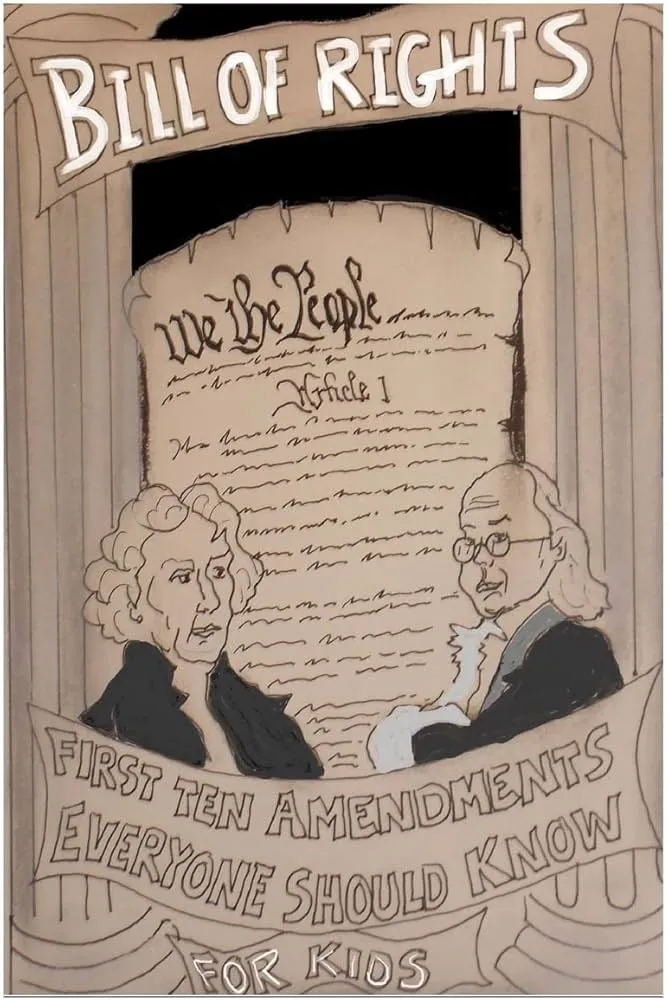 Photo: Bill of Rights, via m.media-amazon.com
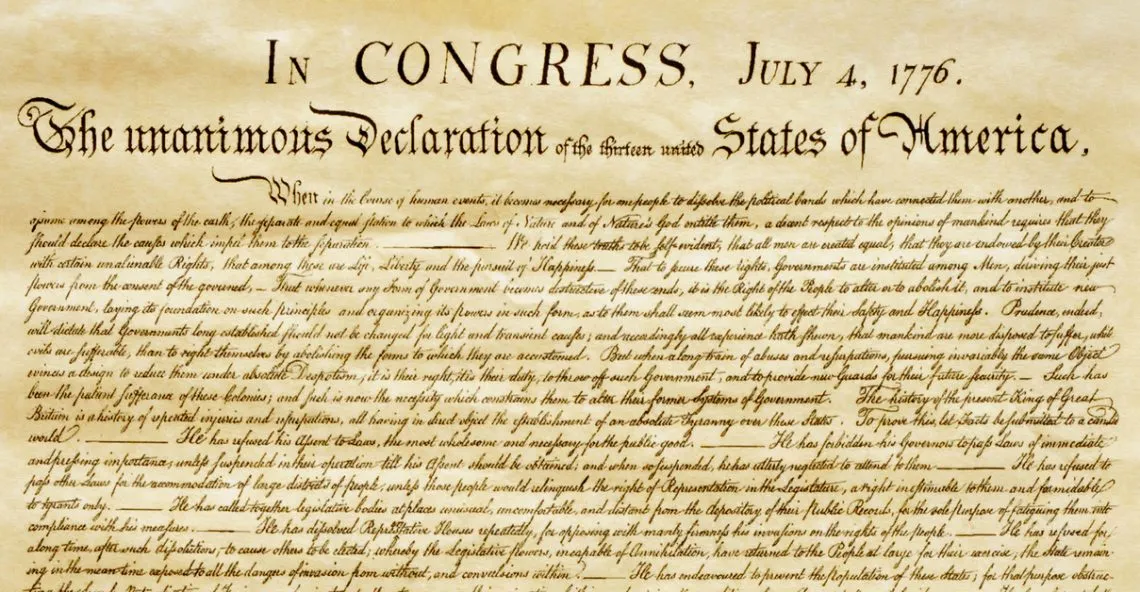 Photo: Declaration of Independence, via gebamerica.com
We've created a world where signing up for a grocery store loyalty card requires more legal documentation than buying a house once did. Every click is a contract, every swipe is an agreement, and every purchase generates a digital paper trail that would have overwhelmed entire law firms a generation ago.
What We Lost in Translation
The shift from handshake to hashtag wasn't just about legal protection—it fundamentally changed how Americans relate to each other in commerce. The old system required looking someone in the eye, taking their measure as a person, and making a judgment about their character.
Today's system requires no human judgment at all. Algorithms determine creditworthiness, automated systems approve transactions, and digital signatures replace the need to ever meet the person you're doing business with. We've gained efficiency and lost intimacy.
The psychological impact runs deeper than convenience. When every interaction requires legal protection, trust becomes a liability rather than an asset. Why develop relationships with vendors when everything important is covered in the contract? Why invest in reputation when reviews and ratings provide instant feedback?
The Liability Culture
Behind this transformation lies America's evolution into a liability-conscious society. The same legal system that once existed to resolve disputes now works overtime to prevent them. Coffee cups warn that coffee is hot. Ladders include instructions not to use them while sleeping. And every business interaction is wrapped in enough legal disclaimers to protect against lawsuits that previous generations would have considered frivolous.
This isn't necessarily wrong—it's arguably made commerce safer and more predictable. But it's also made it more impersonal and, paradoxically, less trustworthy. When everything requires legal protection, nothing is truly trusted.
The Trust We Can't Download
Perhaps the most striking loss is how this shift has affected our capacity for trust itself. Older Americans often remark on how naturally they once extended credit, made agreements, and entered partnerships based on nothing more than conversation and conviction.
Younger Americans, raised in the age of terms and conditions, often find this almost incomprehensible. Why would you trust someone without legal protection? How could you possibly do business without documentation?
The answer, lost to time, is that trust was once a renewable resource, strengthened through repeated interaction and community oversight. Today's system treats trust as a finite commodity, something to be protected rather than invested.
In gaining legal certainty, we may have lost something equally valuable: the distinctly American faith that most people, most of the time, will do what they say they'll do—not because a contract compels them, but because their word means something.
The handshake deal didn't disappear because it didn't work. It disappeared because we stopped believing it could work. And in that loss of faith, we transformed not just how we do business, but who we are as a people.