The Forgotten Art of Waiting: What We Gave Up When Patience Became Optional
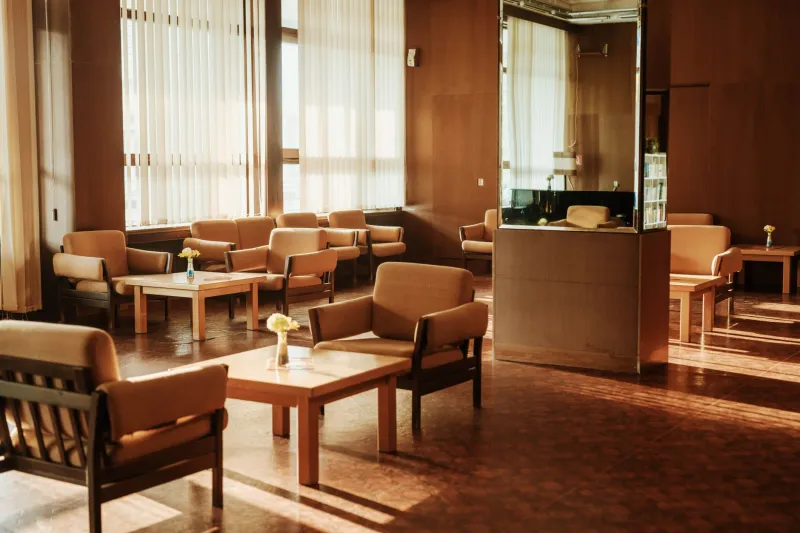
There's a specific kind of silence that used to exist in America. You heard it in waiting rooms, in restaurant lobbies, in the line at the DMV on a Tuesday afternoon. It wasn't comfortable, exactly. But it was familiar. People sat with their thoughts, struck up conversations with strangers, or simply stared at the middle distance while the clock did its thing.
That silence is almost gone now. And the speed that replaced it has come at a cost most of us never thought to calculate.
When Waiting Was Just Part of the Deal
For most of the twentieth century, waiting was baked into nearly every transaction Americans made. You waited at the deli counter while the guy ahead of you deliberated between Swiss and provolone. You waited at the bank, sometimes for thirty minutes, just to cash a check. You waited at the doctor's office — sometimes past your scheduled appointment — flipping through magazines from two months ago without much complaint.
Nobody liked it. But nobody expected anything different, either. Delay was the default condition of life, and tolerance for it was something Americans built up the same way they built up a tolerance for winter: grudgingly, but completely.
Restaurant waits were particularly ritualized. You'd put your name on a list, get handed a buzzer the size of a small paperback, and stand around the parking lot for forty-five minutes. That was the deal. You talked to your dinner companions. You watched other families. You got hungry in a way that made the food taste better when it finally arrived.
The On-Demand Rewiring
Then, gradually and then all at once, the architecture of American patience got dismantled.
It started with small conveniences — ATMs that eliminated the bank line, microwave ovens that made the stove feel slow, remote controls that turned channel-changing from a physical act into a reflex. Each innovation was minor on its own. Stacked together, they began to quietly reset expectations.
The smartphone finished the job. Suddenly, waiting anywhere meant you didn't have to actually wait. You could shop, scroll, stream, and respond to emails from the plastic chair in a fluorescent-lit waiting room. The psychological experience of delay — that slightly uncomfortable, vaguely contemplative state — got engineered out of existence.
Then came the real acceleration. Amazon Prime made two-day shipping feel slow. DoorDash put a restaurant in your pocket. Uber eliminated the cab stand. Real-time tracking meant you could watch your driver navigate traffic on a tiny map, turning the wait itself into a performance. You weren't waiting anymore. You were monitoring.
The result? A fundamental shift in what Americans consider acceptable. Studies have found that the average person abandons a webpage if it takes more than three seconds to load. Three seconds. A generation ago, you'd wait three minutes for a dial-up connection just to check your email — and feel lucky to have it.
What the Wait Was Actually Doing
Here's the part that doesn't show up on any convenience metric: waiting had side effects that were actually good for us.
There's a reason therapists talk about delayed gratification as a cornerstone of emotional health. The ability to tolerate discomfort, to sit with anticipation without immediately resolving it, is tied to better decision-making, lower anxiety, and stronger impulse control. It's a muscle. And like most muscles, it weakens when you stop using it.
Beyond the psychological, there was the social dimension. Waiting rooms were, in their odd way, democratic spaces. The DMV put the accountant next to the mechanic. The pediatrician's waiting area turned strangers into temporary allies, bonded by shared boredom and the distant sound of a fish tank. People talked. Not about anything important, usually. But that's exactly the point — the casual, unplanned conversation is one of the rarest things in modern American life.
Even the physical act of waiting had value. Standing in a slow-moving grocery line was a brief, enforced pause in a day that otherwise never stopped. You couldn't do anything useful, so you just... existed for a moment. That's not nothing.
The New Impatience Economy
What we've built in place of waiting is impressive, genuinely. The logistics infrastructure behind same-day delivery is a modern marvel. Real-time medical check-in apps are a legitimate improvement over clipboards and outdated magazines. Nobody is seriously arguing that waiting an hour at the DMV built character in any meaningful way.
But there's a difference between reducing unnecessary friction and eliminating all friction entirely. The former is progress. The latter might be something else.
Restaurants now report that customers who use waitlist apps are more likely to abandon their reservation if the wait extends beyond the estimate — even by five minutes. Retail therapy has largely migrated online, partly because the physical store requires the one thing the internet doesn't: your presence, in real time, with no guarantee of instant results.
And the irony is that despite all this optimization, Americans report feeling more rushed than ever. We've eliminated the waiting, but we haven't found the peace that was supposedly on the other side of it. We've just filled the space with more stimulation.
Patience as a Lost Skill
Somewhere between the buzzer at the Applebee's hostess stand and the real-time GPS ping tracking your pizza delivery, we stopped practicing patience as a skill and started treating it as a failure of the system.
That's a subtle but important shift. When delay becomes intolerable rather than merely inconvenient, we've lost something harder to quantify than time. We've lost our tolerance for the unresolved, the pending, the not-yet.
Maybe that's fine. Maybe the frictionless future is worth it. But it's worth at least pausing — briefly, impatiently, phone in hand — to ask what we traded away to get here.