Forty Minutes Alone With Your Thoughts: What Happened to the American Commute
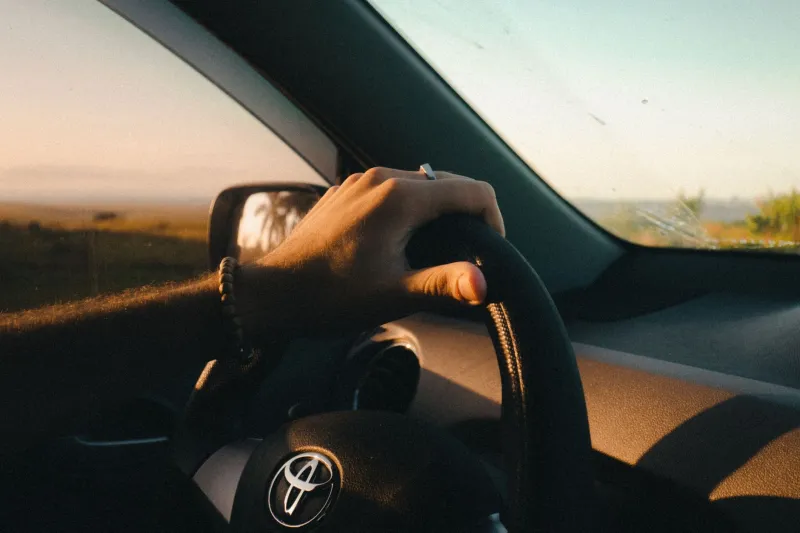
Somewhere around 1994, the American commute was still a pretty simple thing. You got in the car, you turned on the radio, and for the next thirty or forty minutes, your brain was more or less off the clock. Traffic was annoying. The morning DJ was occasionally insufferable. But the time was, in a genuine sense, yours.
Fast forward to today, and that same stretch of highway looks completely different — even if the road itself hasn't changed. The driver in the next lane is on a Bluetooth call. The one behind her is catching up on a podcast she's three episodes behind on. Somewhere in the back of that SUV, a teenager is watching YouTube through the headrest screen. The commute hasn't gotten shorter. It's just been fully colonized.
The Radio Was Enough
Before smartphones and streaming, the commute operated on a kind of benign autopilot. AM radio was the dominant companion for millions of American drivers through the 1970s and into the '80s. You'd catch the news, the weather, maybe a little sports commentary. FM stations brought better music and livelier personalities. But the key thing — the thing worth remembering — is that none of it demanded much from you.
You weren't expected to retain anything. You weren't going to be quizzed on what the traffic reporter said about the interchange on I-95. The radio filled the silence without filling your head. And that distinction matters more than it might seem.
Psychologists have a term for the mental state that kind of passive, low-demand activity can produce: mind-wandering. It sounds like a flaw. It isn't. Research has consistently shown that when the brain isn't actively focused on a task, it shifts into a default mode that's associated with problem-solving, emotional processing, and creative thinking. In other words, zoning out on the highway wasn't wasted time. It was, in a quiet way, productive time — just not the kind you could put on a résumé.
When the Phone Came Along for the Ride
The shift didn't happen all at once. It crept in gradually, the way most cultural changes do. First came the car phone — a novelty, then a status symbol, then a tool. By the late 1990s, mobile phones were common enough that the commute started pulling double duty as call-return time. By the mid-2000s, hands-free technology made it feel almost responsible to keep working while driving.
Then came the podcast boom, and with it, a whole new ethic around commute time. Suddenly, there was pressure — subtle but real — to be doing something with those forty minutes. Learning a language. Catching up on true crime. Staying informed. The implicit message was that silence in the car was a kind of waste, and waste was something Americans had been trained to avoid.
By the time streaming platforms started curating personalized audio playlists and Audible made audiobooks frictionless, the transformation was complete. The commute had become an extension of the workday, or at least an extension of the consumption day. Either way, it stopped being a pause and started being a slot.
The Transition That Used to Exist
There's something worth naming here that rarely gets discussed in conversations about productivity or technology: the commute used to serve as a psychological decompression chamber.
When you left the office and got in the car, the act of driving — the physical movement, the change of environment, the passage of time — helped your brain begin to shift modes. Work thoughts started to recede. Home thoughts started to surface. By the time you pulled into the driveway, you'd done a little mental housekeeping without even realizing it.
Therapists and organizational psychologists have written about this transition function for years. The commute, however frustrating, was a boundary. It told your nervous system: that part of the day is ending. This part is beginning. The fact that it was largely unstructured was the point. Structure is what you'd just spent eight hours inside of.
Remote work, ironically, made this clearer by removing the commute entirely. Millions of people who started working from home during the pandemic reported struggling to mentally separate work from home life — not because they weren't disciplined, but because the transition ritual was gone. Some people started taking fake commutes: walking around the block before logging on, or sitting in their parked car for ten minutes before coming inside. They were, without fully realizing it, trying to recreate something that the old-fashioned commute had provided for free.
The Efficiency Trap
There's a certain logic to filling commute time with useful content. If you're going to be stuck in traffic anyway, why not learn something? Why not stay connected? Why not get ahead?
But efficiency has a way of eating everything it touches. When every moment becomes an opportunity to optimize, the moments that used to just exist start to feel like failures. Sitting quietly in a car with nothing playing begins to feel vaguely irresponsible — like leaving money on the table.
The trouble is, the brain doesn't actually work that way. It needs downtime the same way a muscle needs rest. Filling every available minute with input doesn't make you sharper. At some point, it makes you flatter.
What the Index Shows
If you were to chart the American commute over the past fifty years — not in miles or minutes, but in mental texture — the line would tell a striking story. It would show a gradual but decisive shift from unstructured transition time to scheduled content consumption. From silence to signal. From thinking to receiving.
None of it was forced on anyone. Every podcast subscription was voluntary. Every Bluetooth call was a choice. But the cumulative effect of all those individual choices has been a significant loss — one that's hard to quantify precisely because what we lost wasn't a feature. It was an absence. And absences are easy to miss until they're gone.
The car is still there. The highway is still there. The forty minutes are still there. What's changed is what we've decided to do with them — and whether we're willing to admit that doing nothing with them might have been the smarter move all along.