The Guy Behind the Counter Knew What You Should Hear Next. We Miss Him More Than We Admit.
The Church of the Record Store
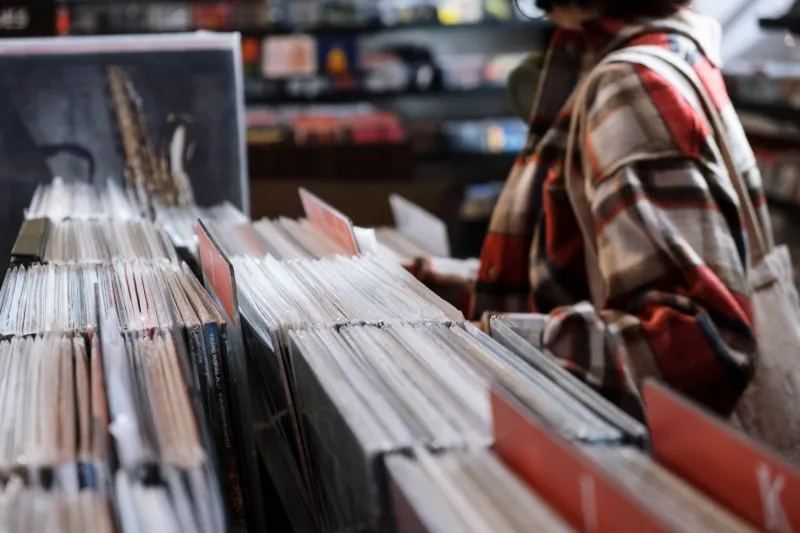
If you grew up in America before the late 1990s, you probably remember the particular atmosphere of a good record store. The smell of cardboard sleeves and old vinyl. The handwritten staff recommendation cards taped to the bins. The low-level hum of whatever the clerk had decided everyone needed to hear that afternoon, whether they wanted to or not.
And then there was the clerk himself. (It was often a him, though not always.) Opinionated, encyclopedic, occasionally condescending, and almost always right. You'd bring a record to the counter and he'd glance at it, glance at you, and say something like, "If you like that, you need to hear this." And he'd pull something from behind the counter that you'd never heard of, that you'd end up playing for the next six months straight.
That transaction — informal, human, slightly uncomfortable — was how a generation of Americans discovered music that mattered to them. Not an algorithm. A person with taste and an agenda.
How Discovery Actually Worked
Before streaming, before iTunes, before even the wide adoption of the internet, music discovery operated through a loose network of human filters. The record store clerk was one node. The local radio DJ was another — not the corporate-programmed variety that would come to dominate FM radio in the late 90s, but the earlier breed who genuinely curated playlists and had opinions about what deserved airtime.
Word of mouth was the third channel, and it moved slowly and meaningfully. A friend handed you a cassette tape they'd made. You played it until it wore out. You talked about it. You went looking for more by the same artist. The friction of the process — the effort required to actually obtain and listen to music — meant that when something stuck, it really stuck.
There was also the album as a unit of meaning. Buying a record was a financial commitment. You'd read the liner notes, study the cover art, listen to side A and side B in sequence. You knew the album as a whole, not just the two tracks that got radio play. Artists structured their work around that listening experience. Some of the most important music ever made was buried on track seven of side two, exactly where a streaming algorithm would never think to put it in your queue.
The Collapse Happened Fast
Napster launched in 1999. Within two years, the record industry was in freefall, and the physical retail ecosystem that had supported music discovery for decades began to collapse with it. Tower Records — once a cathedral of American music culture, with its flagship stores in New York and Los Angeles — filed for bankruptcy in 2006. Independent record stores shuttered across the country throughout the 2000s.
ITunes offered a partial replacement, but it fundamentally changed the unit of consumption from the album to the individual track. The thirty-nine-cent song replaced the fifteen-dollar record. The careful sequencing that artists had built their work around became irrelevant when listeners could simply buy the single they'd heard on the radio and skip everything else.
Spotify launched in the US in 2011, and within a decade, streaming had become the dominant mode of music consumption. For the first time in history, virtually every commercially released piece of music was available to virtually every American for less than the cost of a single album per month. It was, by any objective measure, an extraordinary achievement.
And yet.
The Paradox of Infinite Choice
Here's the thing about having access to 100 million songs: it doesn't automatically make finding your next favorite artist easier. It might actually make it harder.
Psychologists have a name for this — the paradox of choice. When options are limited, decisions are simpler and satisfaction tends to be higher. When options are effectively infinite, the decision becomes paralyzing, and whatever you choose comes with the nagging suspicion that something better was just around the corner.
Streaming platforms recognized this problem early and built algorithmic recommendation systems to address it. Spotify's Discover Weekly, Apple Music's personalized radio, YouTube's autoplay — all of these are attempts to replicate, at scale, what the record store clerk once did in person. They analyze your listening history, identify patterns, and serve you music that fits the profile they've built of your taste.
The results are competent. Sometimes genuinely impressive. But they optimize for what you already like, not for what you should like. The clerk behind the counter didn't care whether the record he was recommending fit your established taste profile. He cared whether it was great. Those are different things.
What the Algorithm Can't Do
The record store clerk operated with something no recommendation engine has ever successfully replicated: genuine aesthetic conviction combined with knowledge of you as a specific person in a specific moment.
He knew you'd been going through a rough patch because you'd been buying a lot of sad records. He knew you were ready for something more challenging because you'd worked your way through the obvious stuff. He could read the slight hesitation when you picked up an album you weren't sure about and decide whether to push you toward it or talk you out of it. He had a point of view, and he was willing to defend it.
Algorithms don't have points of view. They have optimization targets. And the target is engagement — keeping you listening, keeping you on the platform, serving you content that feels comfortable enough to stick around for. That's not the same as serving you music that changes how you hear the world.
The Thing We're Quietly Mourning
Record Store Day — the annual celebration of independent vinyl retailers held every April — has become one of the more unexpectedly popular cultural events in America. Lines form before dawn outside small shops in cities and towns across the country. People who have Spotify on their phones wait for hours to buy a physical record they could technically stream for free.
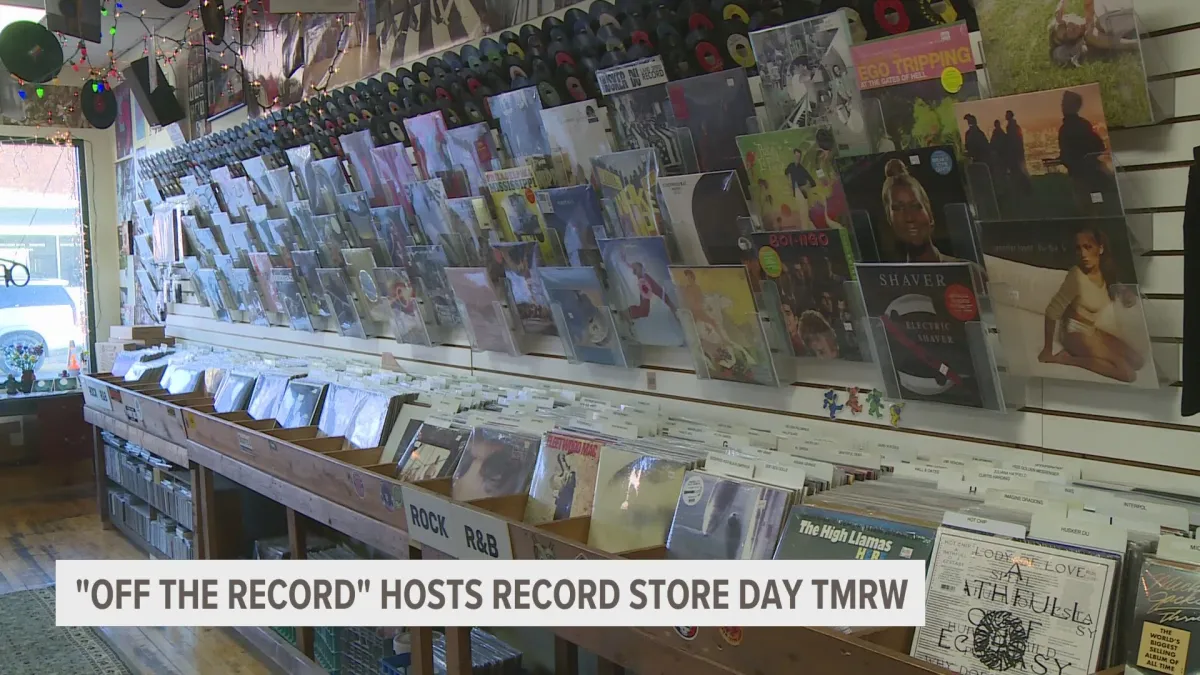 Photo: Record Store Day, via media.wzzm13.com
That's not nostalgia for inconvenience. It's something more specific: a longing for the experience of music as something that happened in community, guided by expertise, rooted in place. The record store wasn't just a retail transaction. It was a gathering point for people who took music seriously, presided over by someone whose entire identity was organized around knowing more about it than you did.
We have everything now. Every song, every artist, every era, available instantly and endlessly. And somehow, a lot of us are still waiting for someone to just tell us what to listen to next.