The House That Nobody Knows How to Fix Anymore
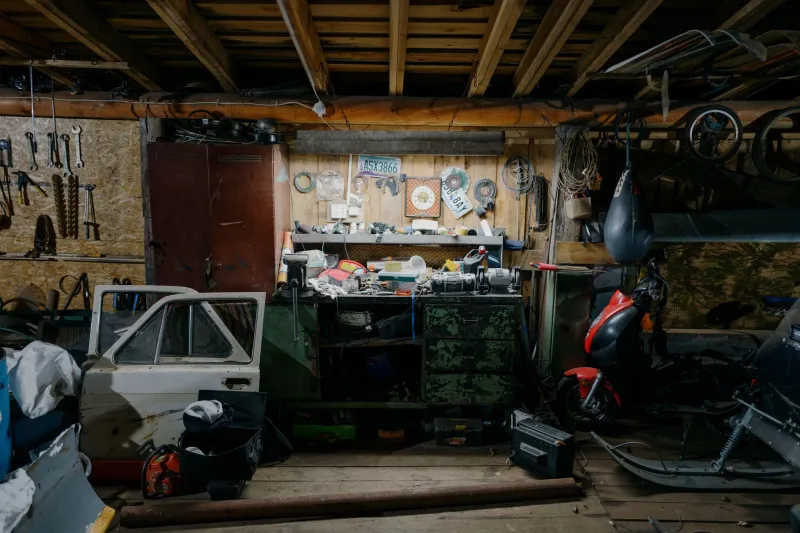
Somewhere in a garage in the American midwest, there's probably a shelf of books that haven't been touched in thirty years. Reader's Digest Complete Do-It-Yourself Manual. A worn copy of How to Be Your Own Home Repairman. A binder full of clipped magazine articles about replacing tile and fixing leaky pipes.
Those books were the internet of their time — a practical library of accumulated knowledge that assumed the person holding them was capable of doing the work. That assumption has quietly, almost completely, disappeared.
When Americans Knew Their Houses
For most of the postwar era, home ownership came bundled with a kind of informal technical literacy. The men who built the suburbs in the late 1940s and 1950s were often veterans who'd been trained to fix things under pressure. Their wives managed households with a similar pragmatism. Together, they raised a generation that grew up watching repairs happen in real time — watching a parent assess a problem, consult a manual, gather materials, and solve it.
This wasn't just about saving money, though it did that too. It was a relationship with the physical structure of home. You knew where the shutoff valve was. You knew which breaker controlled the kitchen. You understood, in a rough but functional way, how the systems of your house worked — because you'd had your hands on most of them at some point.
Neighborhood knowledge filled the gaps. Every block had someone who knew plumbing, someone who understood electrical, someone who'd built a deck and was happy to talk you through building yours. Skills circulated informally, traded over backyard fences the same way tools were borrowed and returned.
The Great Outsourcing
Something started shifting in the 1980s and accelerated sharply from there. A combination of forces — some practical, some cultural, some legal — began moving home maintenance out of the hands of owners and into the hands of specialists.
Building codes grew more complex. What had once been a homeowner's right to modify their own property became, in many jurisdictions, a web of permit requirements, inspection schedules, and licensed-contractor mandates. Electrical work above a certain scope. Any structural modification. HVAC installation. In some states, even replacing a water heater requires a permit and a licensed plumber. The rules exist for legitimate safety reasons. But their cumulative effect was to make homeowners feel legally and technically unqualified to touch the systems they owned.
Liability concerns entered the picture too. Real estate transactions began requiring disclosure of any unpermitted work, creating a financial disincentive for DIY projects that weren't done through official channels. A homeowner who rewired a bathroom themselves — even competently — risked complications when they eventually went to sell.
At the same time, the trades themselves became more specialized. The generalist handyman who could do a bit of everything gave way to distinct professional categories: HVAC technicians, licensed electricians, certified plumbers, structural engineers. Each brought genuine expertise. But together they fragmented what used to be a single, manageable body of household knowledge into something that felt impossibly technical.
The Mental Health Angle Nobody Talks About
Here's where this goes somewhere unexpected.
Research in occupational therapy and psychology has spent years documenting something that handy people have always known intuitively: physical problem-solving has measurable mental health benefits. The act of diagnosing a problem, planning a solution, working with your hands, and completing a task produces a specific kind of satisfaction that cognitive work doesn't replicate. It's grounding. Literal, in the sense that it connects you physically to the material world.
Homeowners who regularly maintain and repair their own spaces report higher levels of what researchers call place attachment — a psychological bond with where they live that's associated with lower stress, stronger community ties, and greater overall wellbeing. When your house is just a financial asset managed by contractors you call and wait for, that bond weakens. The house becomes a service you consume rather than a place you inhabit.
There's also the competence dimension. Knowing that you can fix things — that you're not helpless in the face of a dripping faucet or a stuck door — is a small but real source of confidence. It's the kind of quiet self-reliance that used to be assumed in American adults and is now increasingly rare.
What We Call Professionals For Now
The scope of what Americans outsource has expanded well beyond the genuinely complex. A 2023 survey found that the majority of homeowners under 40 had never replaced a light switch, unclogged a drain without chemical products, or patched a hole in drywall. Tasks that a previous generation would have handled in an afternoon are now service calls with scheduling windows and minimum fees.
This isn't entirely the homeowners' fault. They were never taught. Shop class disappeared from most American schools by the 1990s. The generational transmission of practical knowledge — father to son, mother to daughter, neighbor to neighbor — broke down as family structures changed, neighborhoods turned over faster, and screens replaced the garage as the default after-school environment.
YouTube has partially filled the gap. There's a thriving ecosystem of tutorial content that walks homeowners through repairs step by step, and it has genuinely reactivated some DIY instincts. But watching a video isn't the same as growing up in a house where things got fixed by the people who lived there.
Reconnecting With the Physical
A quiet revival is underway in some corners. Makerspaces, community tool libraries, and local repair cafes have emerged in cities across the country, creating spaces where people can relearn the basics with guidance. Home improvement retailers have expanded their workshop programming. The pandemic, which trapped people inside with a suddenly very visible list of deferred maintenance, pushed a meaningful number of Americans back toward hands-on problem-solving.
But the deeper shift — the one that made homes feel like technical systems beyond ordinary comprehension — hasn't reversed. Most Americans still live in houses they fundamentally don't understand, managed by specialists they can't evaluate, in a relationship with their own walls and pipes that is purely financial.
That's a strange way to live somewhere. And it's worth asking whether the convenience of outsourcing everything has cost us something harder to invoice than a service call.