Your Entire Medical Life Used to Fit in a Manila Folder — And Disappear Just as Easily
Imagine this: you've just moved from Cincinnati to Phoenix. You're starting over with a new doctor, a new practice, a new city. You hand over your insurance card, fill out a clipboard of forms, and then — when asked about your medical history — you do your best to remember.
Your best, it turns out, isn't very good. You can't recall the name of the antibiotic that gave you a reaction in 1987. You're fuzzy on the exact dosage of the blood pressure medication your old doctor switched you to last spring. And your family physician of 22 years? He retired. His records? Somewhere in storage, if they haven't already been shredded.
For most of the 20th century, this wasn't a horror story. It was just Tuesday.
The Filing Cabinet as Medical Archive
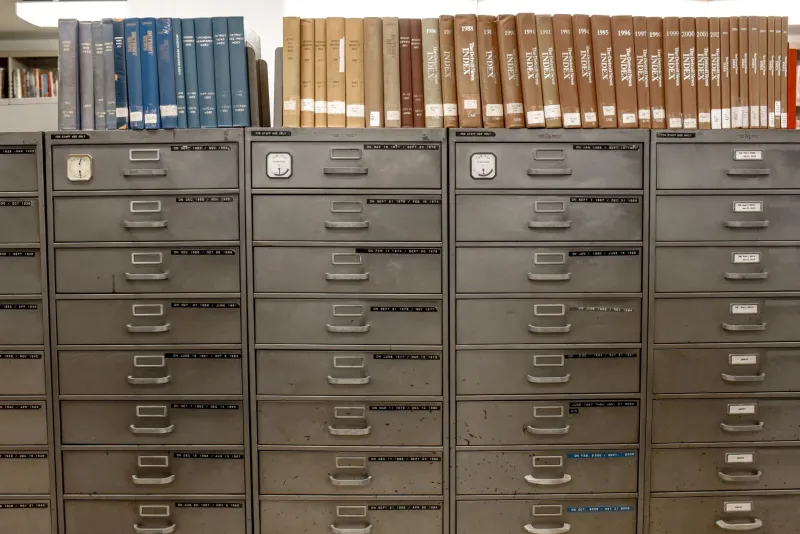
Through the 1970s, 80s, and well into the 90s, the American medical record was a physical object — a folder, a chart, a collection of handwritten notes and carbon-copy lab results held together by a rubber band and stored in a room-sized filing system that only one office could access at a time.
Each doctor kept their own. Specialists maintained separate records. Hospitals had their own archives. None of it talked to each other. If you saw three physicians in a year, you had three incomplete pictures of your own health scattered across three different offices in potentially three different zip codes.
The system worked — barely — as long as you stayed put. Small-town America, where generations visited the same family doctor and rarely left, was reasonably well served by this model. But as Americans became more mobile, as healthcare became more specialized, and as treatments grew more complex, the cracks turned into chasms.
Medical errors caused by missing or inaccessible information weren't anomalies. They were structural. Physicians prescribed medications without knowing what a patient was already taking. Allergies went unrecorded. Surgeons operated without complete histories. The Institute of Medicine's landmark 1999 report estimated that up to 98,000 Americans died every year from preventable medical errors — and fragmented record-keeping was a significant contributor.
 Photo: Institute of Medicine, via www.pasafetynet.org
The Typewriter, the Transcriptionist, and the Two-Week Wait
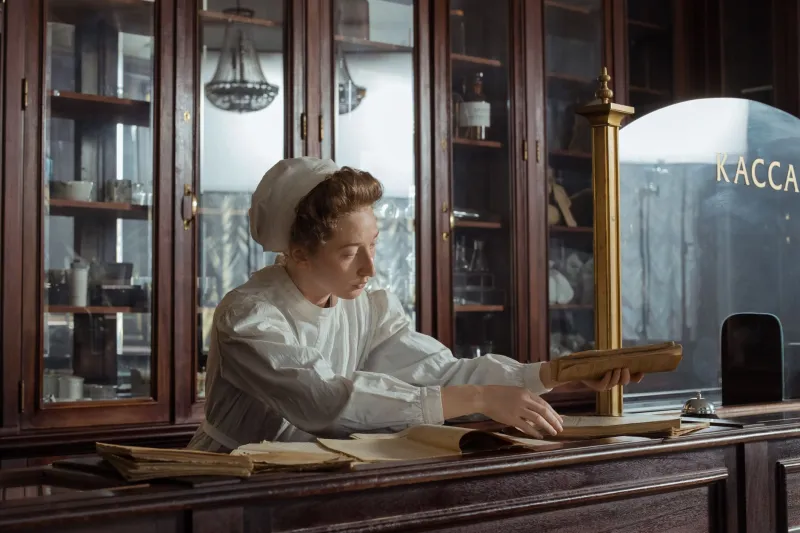
Even when records existed, accessing them was its own ordeal. Requesting your own medical records — a process that is now largely instantaneous — once required a written request, a signed release form, a waiting period of days or weeks, and sometimes a copying fee charged per page. Hospitals weren't legally required to provide records in any particular timeframe. Some states had no rules at all.
For patients managing chronic conditions, coordinating between specialists, or simply trying to get a second opinion, this wasn't inconvenient — it was dangerous. By the time your records arrived at the new office, your appointment had come and gone, or the information was already outdated.
Physicians, for their part, were often working from notes they'd scrawled between appointments — abbreviated, shorthand, occasionally illegible even to themselves. The joke about doctors' handwriting wasn't just a joke. It was a patient safety issue. A misread decimal point. A smudged drug name. The consequences could be severe.
The Digital Shift That Changed Everything
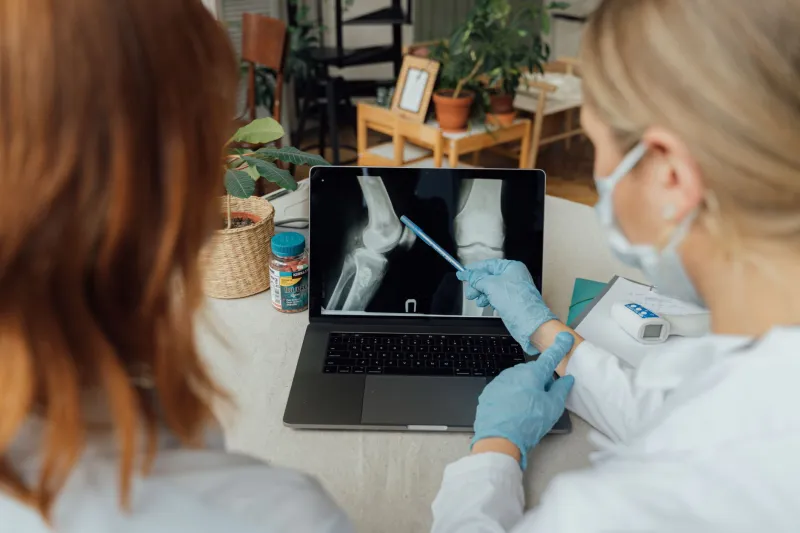
The transition to Electronic Health Records — EHRs — began slowly in the early 2000s and accelerated dramatically after the Health Information Technology for Economic and Clinical Health (HITECH) Act of 2009, which tied federal incentive payments to the adoption of digital systems. By 2021, nearly 90 percent of office-based physicians in the United States were using EHR systems, up from just 22 percent in 2008.
The difference is difficult to overstate. A physician seeing a new patient today can, within minutes, access years of lab results, medication histories, imaging reports, and specialist notes — assuming the systems talk to each other, which remains an ongoing challenge. Allergies are flagged automatically. Drug interaction warnings appear before a prescription is written. Test results that once required a follow-up phone call appear in a patient's online portal the same day they're processed.
For patients, the shift has been equally transformative. Apps like MyChart and similar portals have turned passive recipients of care into active participants in their own health management. You can review your bloodwork before your doctor calls. You can share records with a specialist across the country in seconds. You can see, in plain language, what your physician actually wrote about you — something that would have been nearly unthinkable 30 years ago.
What We Gained — and What We're Still Figuring Out
The benefits are real and well-documented. Studies have shown that EHR adoption correlates with reductions in duplicate testing, faster diagnosis times, and fewer adverse drug events. During the COVID-19 pandemic, digital health infrastructure allowed providers to coordinate patient care at a scale and speed that a paper-based system simply couldn't have supported.
But the transition hasn't been frictionless. Early EHR systems were notoriously clunky, designed more for billing efficiency than clinical usability. Physician burnout — partially attributed to time spent clicking through digital interfaces rather than talking to patients — became a growing concern. And interoperability, the ability for different hospitals and clinics to actually share records across platforms, is still a work in progress despite years of regulatory pressure.
Data privacy is a legitimate and unresolved tension. A medical record that lives in a filing cabinet can only be stolen physically. A digital record, connected to networks, carries different risks — as healthcare data breaches affecting millions of Americans in recent years have demonstrated.
The Index Has Changed
There's something quietly profound about the shift from a world where your medical history could vanish with a retiring doctor to one where it follows you everywhere. For generations, Americans carried their health stories in their heads — imperfectly, incompletely, and often catastrophically wrong when it mattered most.
The manila folder wasn't just inefficient. It was a monument to the idea that medical information belonged to the physician, not the patient. The move to digital records — imperfect as the system remains — represents something more than a technological upgrade. It's a transfer of ownership. Your health history is, for the first time in American medical history, genuinely yours.
That's a change worth pausing to appreciate — even if your EHR portal is still asking you to reset your password.