The Day Had a Last Page: What America Traded Away When the News Never Stopped
At 6:30 p.m. on a Tuesday in 1971, Walter Cronkite looked into the camera, said "And that's the way it is," and the CBS Evening News ended. Across America, television sets flickered to something else — a sitcom, a game show, the local weather. The news was over. Not paused, not minimized, not running on a second screen. Over.
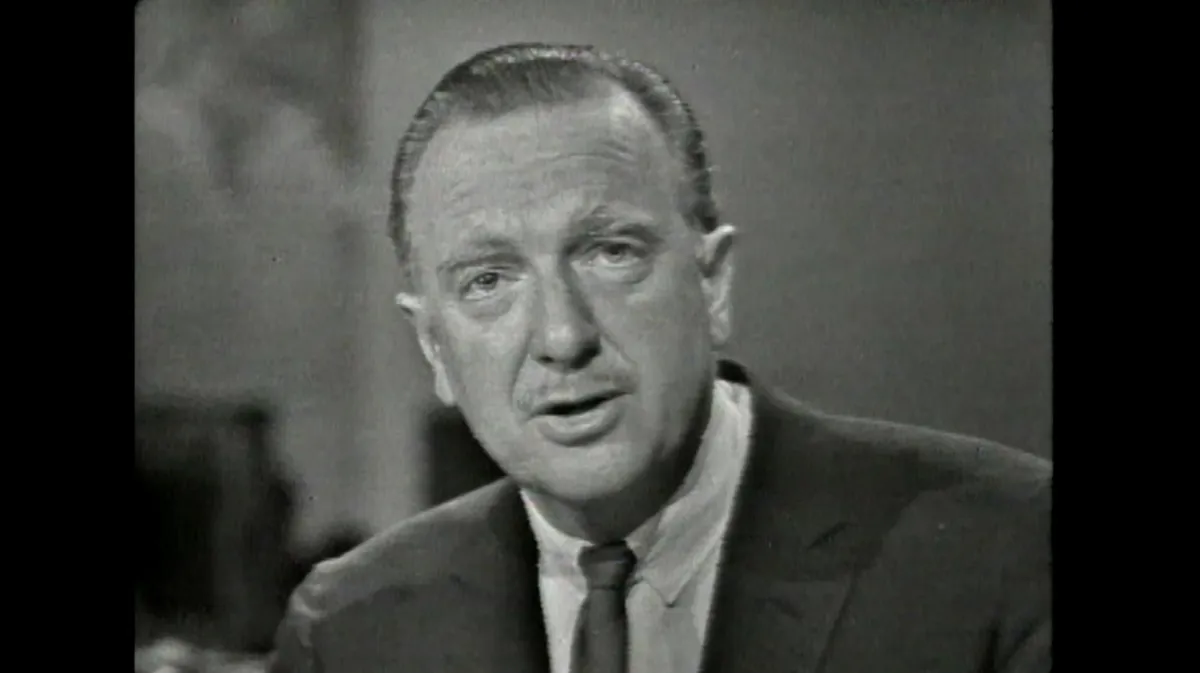 Photo: Walter Cronkite, via m.media-amazon.com
If something happened at 6:45 — a plane crash, a political earthquake, a market collapse — most Americans wouldn't know until the next morning's paper hit the porch. That was simply how it worked. The information cycle had a rhythm, and built into that rhythm was something we now recognize only by its absence: a stopping point.
We gave that up. We told ourselves it was progress. The verdict, a few decades in, is more complicated.
The Architecture of the Old News Day
To understand what's been lost, it helps to reconstruct what the old information environment actually looked like — not as nostalgia, but as engineering.
For most of the twentieth century, Americans received news in two primary batches. The morning newspaper, which had been reported, edited, typeset, printed, and physically delivered, represented the previous day's events processed through multiple layers of human judgment. By the time a story reached your breakfast table, reporters had made calls, editors had asked questions, and copy desks had caught errors. The physical constraints of the printing process built in a mandatory verification lag.
The evening television broadcast — which didn't become a dominant institution until the 1960s — compressed the day's events into roughly 22 minutes of actual content. Space was so limited that only stories that had been confirmed, contextualized, and deemed genuinely significant made the cut. Everything else waited.
Between those two windows, there was a lot of silence. And in that silence, something important happened: people thought about what they'd already heard.
Speed Wasn't the Only Thing That Changed
The transition to continuous news didn't arrive all at once. CNN launched in 1980, widely mocked as "Chicken Noodle News" and taken seriously by almost no one in the industry. It took the Gulf War in 1991 to demonstrate that live, around-the-clock coverage could command national attention. By the mid-1990s, cable news had fragmented into ideologically sorted channels competing not just for eyeballs but for emotional intensity.
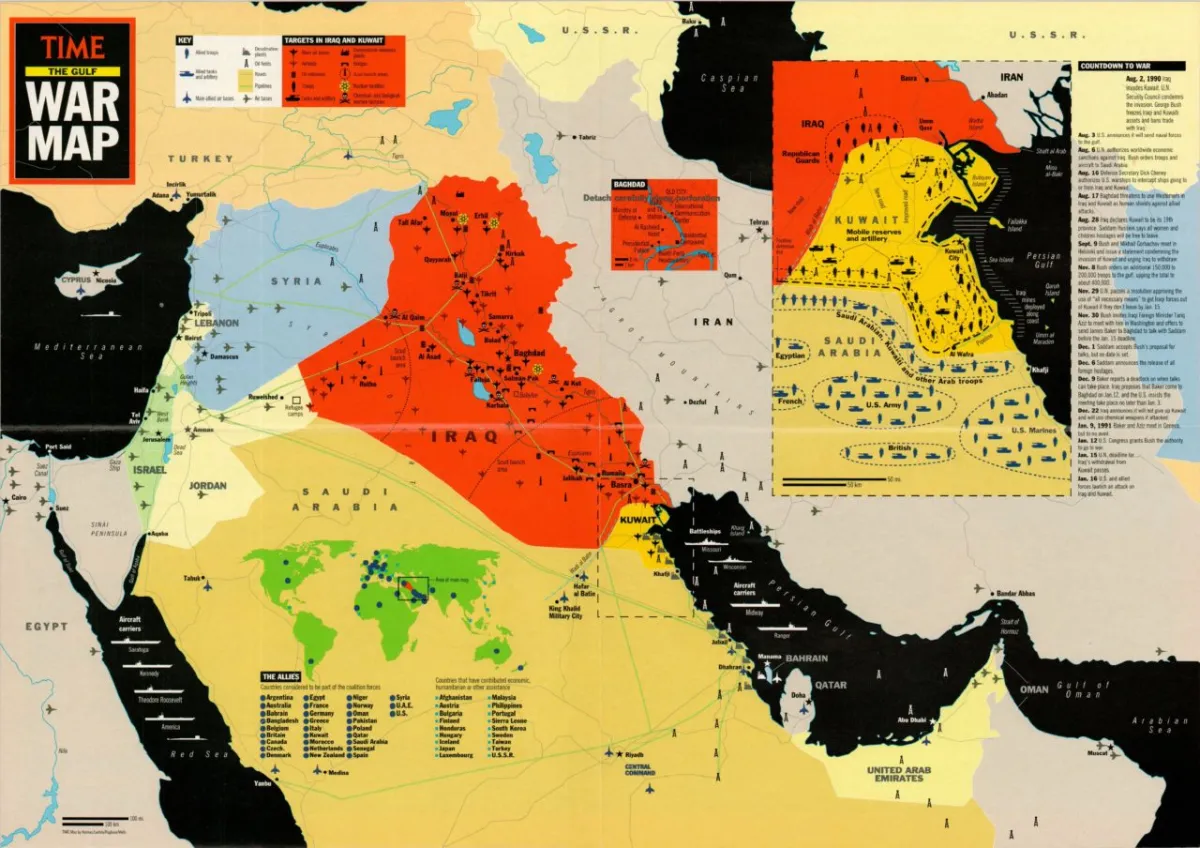 Photo: Gulf War, via curtiswrightmaps.com
The internet accelerated everything. Web-based news in the late 1990s broke the newspaper's monopoly on text. Blogs in the early 2000s broke the professional journalist's monopoly on publication. Twitter, launched in 2006, broke the story's monopoly on the news cycle — now the reaction to the story, and the reaction to the reaction, could unfold faster than the facts themselves.
By 2010, the information environment that Walter Cronkite had operated within was as remote as the Pony Express. The news no longer had a bedtime. It no longer had a last page. It just ran, continuously, on every screen, in every pocket, at every hour.
The Verification Casualty
The old system's slowness, which felt like a deficiency, was also a filter. A story that couldn't be confirmed by press time didn't run. A claim that couldn't be sourced didn't make the evening broadcast. Editors who held stories overnight sometimes discovered, by morning, that the initial reports were wrong — and the correction never needed to be published because the error never went to print.
This is not a defense of the old media's many genuine failures — the stories that were spiked for political reasons, the voices that were systematically excluded, the institutional biases that shaped what counted as news in the first place. Those were real and serious problems.
But the speed constraint enforced a kind of discipline that the modern environment has almost entirely abandoned. When a story breaks at 2 a.m. on Twitter and cable news is covering it live by 2:15, there is no time for the calls that might complicate the narrative. The audience is there, the cameras are rolling, and the competitive pressure to be first overwhelms the institutional pressure to be right. Corrections, when they come, arrive after the original story has already shaped opinion.
Research on how misinformation spreads on social media consistently finds that false stories travel faster and farther than corrections. The architecture of always-on news is structurally favorable to the first version of events, true or not.
The Psychological Toll Nobody Priced In
There's a second cost that's harder to measure but increasingly impossible to ignore.
The enforced pause of the old news cycle gave citizens something that psychologists would now call emotional regulation. When the broadcast ended at 6:30, the anxiety that a difficult news day might generate had a natural boundary. You couldn't do anything about the news tonight. The paper wasn't coming until morning. Whatever was happening would still be happening tomorrow, and tomorrow you'd find out more. That constraint, experienced as frustration in the moment, functioned as a kind of mandatory rest from the low-grade alarm state that difficult news produces.
The always-on environment removes that boundary entirely. Notifications arrive at midnight. Feeds update while you're trying to sleep. The news is never over, which means the anxiety it generates is never over either. Studies of news consumption and mental health consistently find that heavy news exposure correlates with elevated anxiety, depression, and feelings of helplessness — particularly when the news environment is adversarial and fast-moving.
A 2020 study by the American Psychological Association found that more than two-thirds of Americans said the news caused them significant stress. That's not a finding about the content of the news. It's a finding about the delivery mechanism.
What a Stopping Point Was Actually Worth
The morning paper and the evening broadcast didn't just deliver information. They structured the public's relationship to events — giving stories time to develop, giving citizens time to absorb, and giving the entire information ecosystem a rhythm that roughly matched the rhythm of human attention.
When something happened, you heard about it. You thought about it. You slept. You heard more the next day, when more was known. Public opinion formed more slowly, but the formation process had more information baked into it. The national conversation moved at a pace that allowed for some degree of reflection between stimulus and response.
That pace is gone. The modern news environment optimizes for engagement, and engagement is most reliably produced by urgency, outrage, and novelty. The result is a public conversation that runs perpetually hot — constantly reacting, rarely reflecting, and structurally resistant to the kind of measured deliberation that the old constraints, almost accidentally, used to protect.
Walter Cronkite signed off every night. That sign-off wasn't just a closing ritual. It was, in retrospect, a small mercy — the day's last page, turned deliberately, before anyone had to figure out what came next.