The Invisible Safety Net That Used to Live Next Door
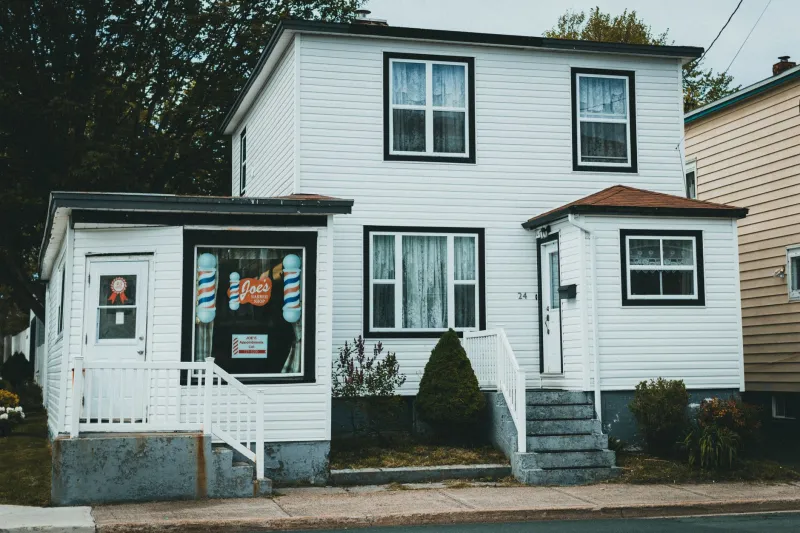
Somewhere in the 1950s, on a street in almost any American city or town, a woman named Margaret knew which kid belonged to which house, which husband drank too much, whose furnace was making that noise again, and exactly what time the Hendersons usually got home. She wasn't nosy. She was the neighborhood.
That kind of knowing — intimate, hyperlocal, unremarkable — was once the operating system of American community life. Nobody called it a social safety net. Nobody called it anything. It just existed, woven into the daily rhythms of people who lived close together and had no real choice but to depend on each other.
Today, surveys consistently show that roughly half of Americans don't know their neighbors' names. That's not just a curiosity. It's the collapse of an entire infrastructure.
What the Block Used to Do
The mid-century American neighborhood functioned like a distributed network with no central server. Information, resources, and labor moved laterally, person to person, without coordination or payment. You borrowed a ladder. You watched someone's kids for an afternoon. You flagged down a neighbor to say the plumber had left the side gate open. You knew, without being asked, that the elderly man on the corner hadn't put his trash out — and that meant something was probably wrong.
This wasn't charity. It wasn't organized civic engagement. It was closer to something anthropologists would recognize from much older societies: a web of low-grade, ongoing mutual obligation that accumulated into genuine resilience. When a family hit a hard stretch, the neighborhood absorbed some of the shock. A casserole showed up. A teenager got a part-time job through someone's cousin. A mother got a ride to a doctor's appointment she couldn't otherwise afford.
The transactions were small. The aggregate effect was enormous.
How the Wires Got Cut
The unraveling didn't happen overnight, and it didn't have a single cause. Postwar suburbanization spread families across wider lots, longer driveways, and streets designed for cars rather than pedestrians. Air conditioning pulled people inside. Television gave them a reason to stay there. Then came the two-income household, which was an economic necessity for most families by the 1980s — but it also meant fewer adults home during the day, fewer front-porch hours, fewer spontaneous conversations over a fence.
The rise of the automobile made it possible — and eventually normal — to meet all your needs outside your immediate geography. You didn't need the neighbor's drill if you could drive to the hardware store. You didn't need to ask someone to watch your kids if you could call a service. Every convenience that made life easier also quietly severed one more thread of local interdependence.
Gated communities and private HOAs replaced informal neighborhood norms with legal frameworks and monthly fees. Trust, which had once been built slowly through repeated small interactions, was replaced with contracts.
The Ledger We Never Kept
Here's what makes this loss hard to quantify: the old neighborhood network was never counted. It didn't show up in GDP. It didn't register in any economic data. When a neighbor watched your kids so you could make a job interview, that didn't appear anywhere as a transaction. When a block collectively kept an eye on an aging widow, no institution recorded the care hours.
By the time economists and sociologists started measuring social capital — Robert Putnam's landmark work Bowling Alone put numbers to the decline in the late 1990s — much of it had already disappeared. And because it had never been formally accounted for, most people didn't notice it was gone until they needed it and found nothing there.
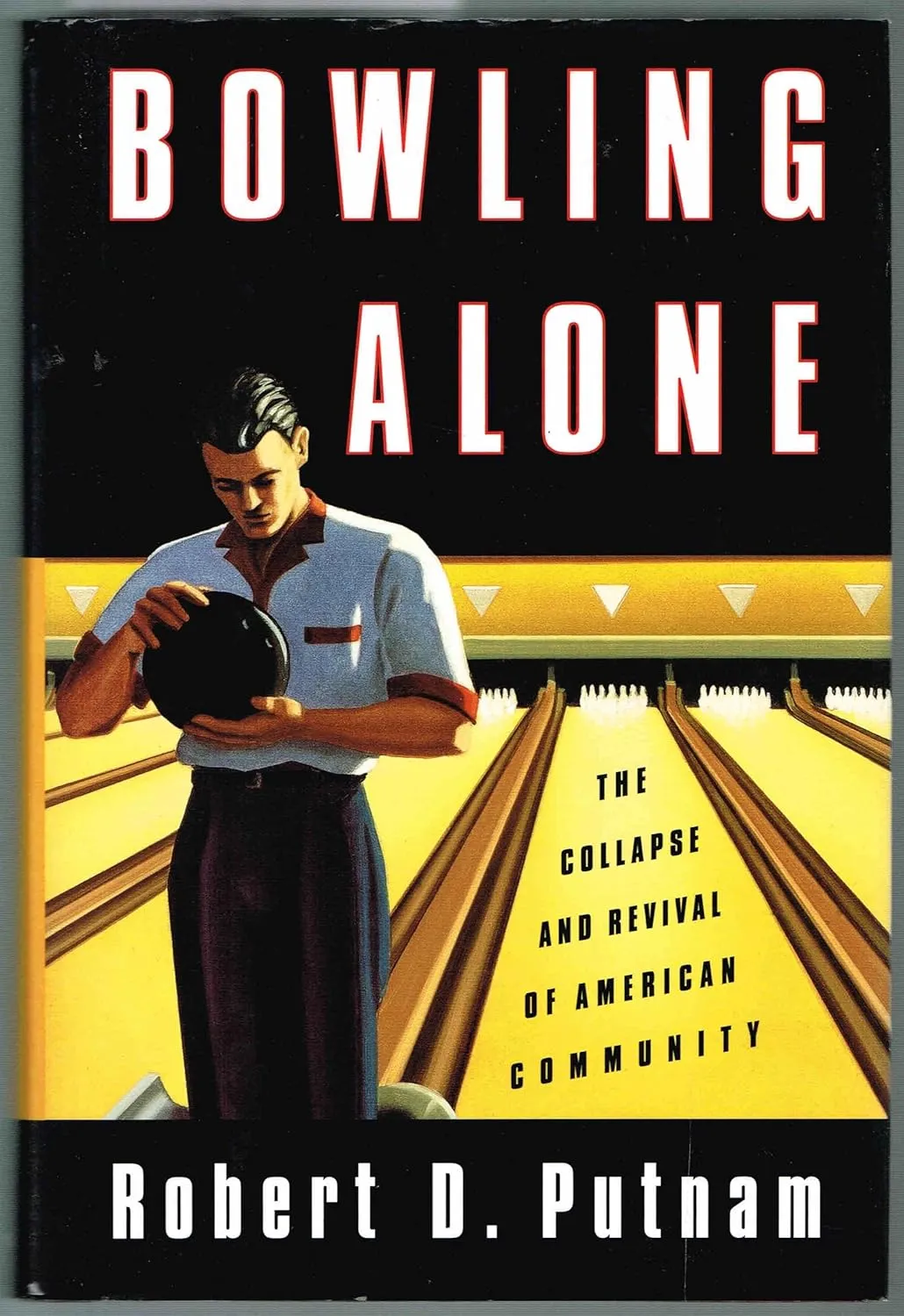 Photo: Bowling Alone, via m.media-amazon.com
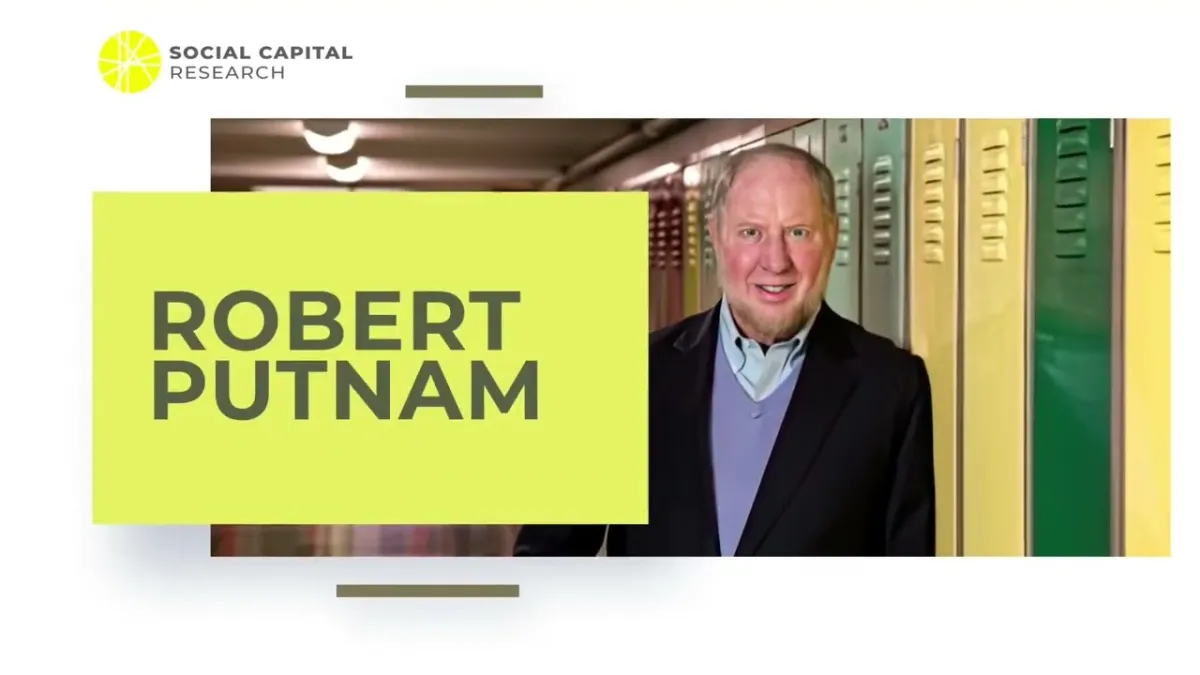 Photo: Robert Putnam, via i.ytimg.com
The modern replacements are real, but they're different in kind. Nextdoor, the neighborhood social app, is used primarily to report suspicious vehicles and argue about leaf blowers. Amazon can deliver almost anything within 24 hours, but it can't tell you that the family down the street just lost a job and could use a meal. Facebook groups exist for most neighborhoods now, but they tend to activate around crises or controversies rather than the low-level, continuous mutual awareness that once made blocks function like organisms.
The Cost Nobody Budgeted For
The atomization of American neighborhood life has real, measurable downstream effects. Loneliness among adults has reached levels that public health officials now describe as epidemic. Social isolation is correlated with worse health outcomes across almost every category — cardiovascular disease, cognitive decline, mortality. The surgeon general of the United States issued a formal advisory on the loneliness crisis in 2023. That's not a cultural observation. That's a medical warning.
Children who grow up in neighborhoods where adults know each other do better by a range of measures — school performance, safety, mental health. The research on what sociologists call "collective efficacy" is consistent: communities where residents feel mutual trust and shared responsibility have lower crime rates, better outcomes for kids, and stronger recovery from economic shocks. That's not nostalgia talking. That's data.
The block-level social contract that once existed informally was, in retrospect, doing enormous work that we've since had to assign to institutions — therapists, social workers, community organizations, government programs — at enormous cost, with notably less effectiveness.
What Getting It Back Might Look Like
Some communities are rebuilding deliberately. The "15-minute city" movement in urban planning is partly an attempt to recreate the conditions that once made neighborhoods function — density, walkability, mixed-use streets where people encounter each other incidentally and repeatedly. Community land trusts, tool libraries, and mutual aid networks that exploded during the COVID-19 pandemic were, in many ways, people rediscovering what their grandparents had never lost.
The awkwardness of those efforts tells you something. When you have to consciously organize a neighborhood potluck, schedule a "meet your neighbors" event, or download an app to do what proximity and shared circumstance once handled automatically, you're fighting against a current that's been running in one direction for seventy years.
Margaret, the woman who knew everything about her street, wasn't performing community. She was just living in one. The distance between those two things is where a lot of American life currently sits — and the gap is wider than most people realize until they need a neighbor and find a stranger instead.