The Night the Lights Came Up: How the Movies Stopped Being an Event and Became a Transaction
Somewhere in the middle of the 20th century, going to the movies was less like watching a film and more like spending a night at the theater. You didn't just show up for a single feature. You arrived, settled in, and stayed — sometimes for hours — as the program unfolded around you.
Newsreels first. Then a cartoon. Maybe a short subject. Then the first feature. An intermission. Then the second feature. By the time the house lights came up for good, you'd been sitting in a velvet seat for the better part of an evening, and nobody thought that was unusual.
Compare that to today: a precisely timed 8:15 showing, a 20-minute pre-roll of trailers, 112 minutes of film, and a lobby designed to move you out the door before the next audience files in. The movies are still the movies. But the experience? That changed almost completely — and most of us barely noticed it happening.
When the Cinema Was a Destination, Not a Venue
The golden age of American moviegoing ran roughly from the 1930s through the late 1950s. During this period, the cinema was one of the central institutions of American social life. Weekly attendance peaked at around 90 million in the late 1940s — in a country of 150 million people. Going to the movies wasn't an occasional treat. For millions of Americans, it was a regular habit, as automatic as church on Sunday.
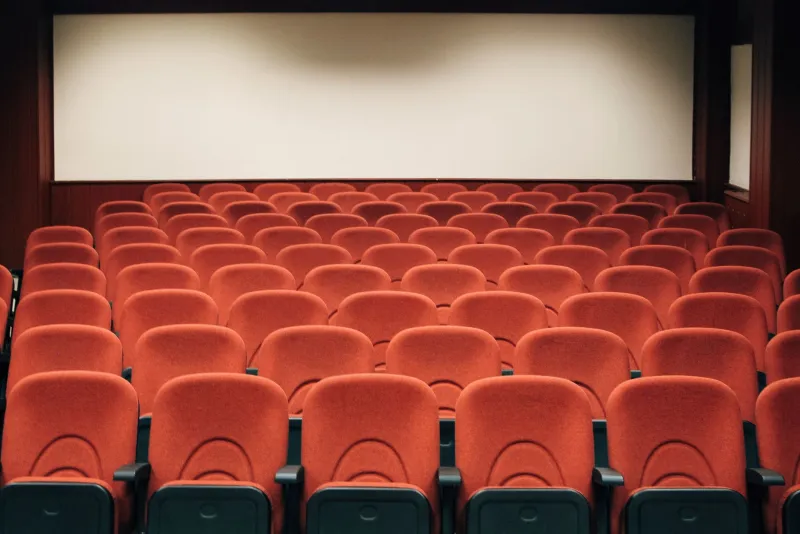
The theaters themselves were designed to reinforce that sense of occasion. The great movie palaces of the era — Grauman's Chinese in Hollywood, the Paramount in New York, the Fox in Detroit — were architectural spectacles. Marble lobbies. Chandeliers. Uniformed ushers who walked you to your seat with a flashlight. Air conditioning, which in the pre-HVAC era was itself a significant draw during summer months. The building was part of the entertainment.
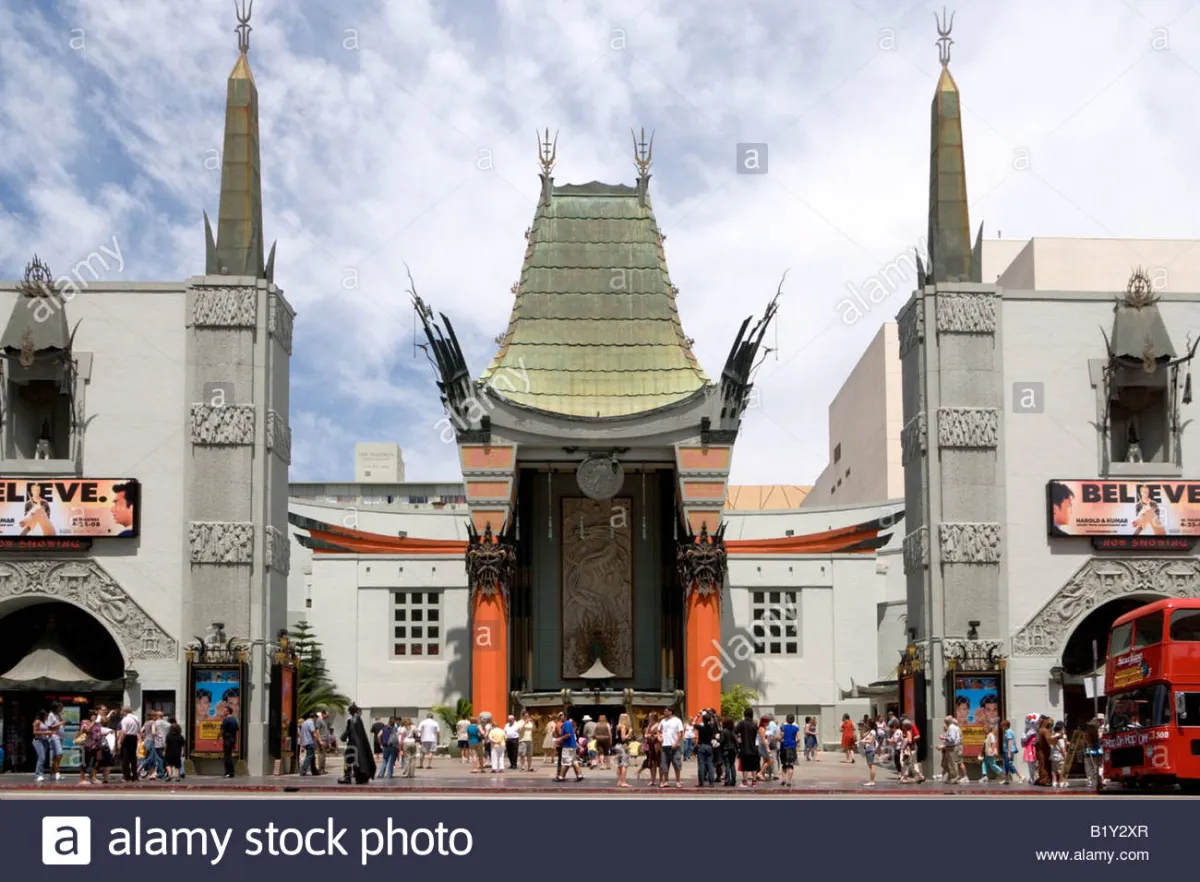 Photo: Grauman's Chinese, via c8.alamy.com
Programs were continuous and often ran without a fixed start time. You simply walked in, found a seat, and watched until the film looped back to the point where you'd entered — giving rise to the phrase "this is where we came in" as a signal to leave. The idea of a scheduled showtime with reserved seating would have seemed almost comically rigid to an audience accustomed to wandering in and out at will.
The Intermission as Social Institution
For longer films, the intermission was a fixture. It wasn't just a bathroom break — it was a designed pause in the experience, often accompanied by an orchestral interlude or a title card announcing the interval. Ushers moved through the aisles selling refreshments. Audiences stretched, talked, and re-engaged with the social dimension of being in a room full of strangers who'd just shared the same two hours.
Films like Gone with the Wind (1939), Lawrence of Arabia (1962), and 2001: A Space Odyssey (1968) were built with intermissions written into their structure — not as concessions to audience endurance, but as intentional dramatic beats. The pause was part of the rhythm.
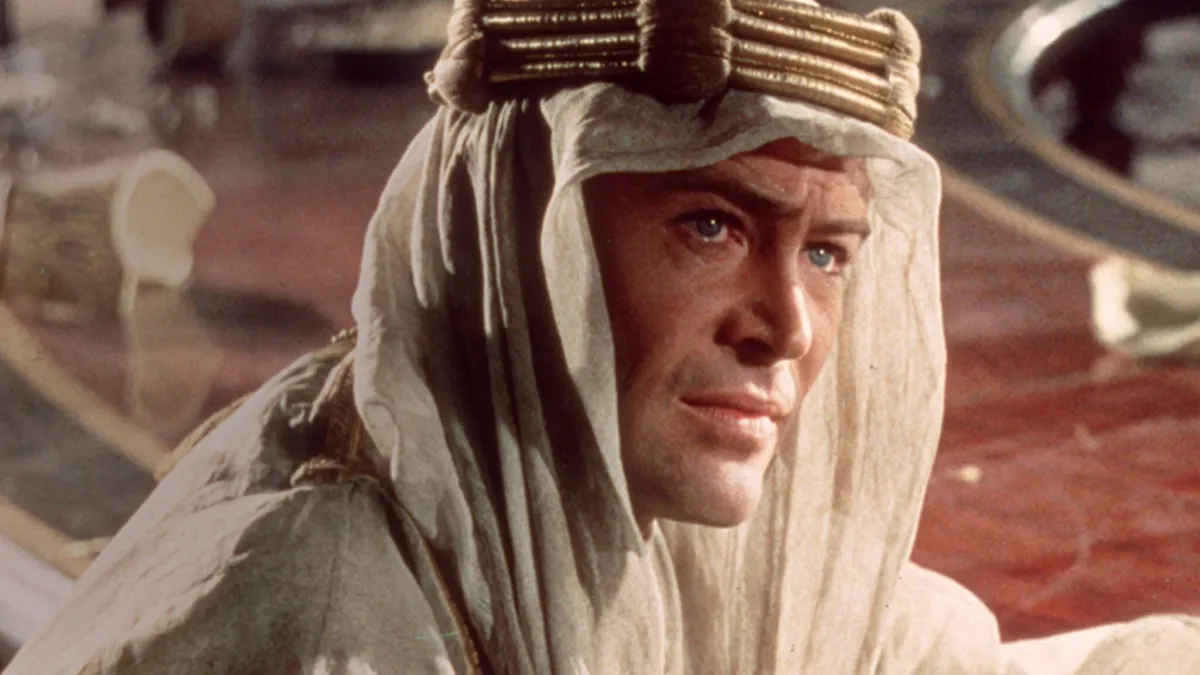 Photo: Lawrence of Arabia, via image.tmdb.org
Double features, meanwhile, were standard practice at neighborhood theaters well into the 1970s. For a single admission price, you got two complete films. Studios produced B-movies specifically to fill the second slot — lower budget, shorter runtime, designed to complement rather than compete with the main attraction. The double bill was a value proposition that made the cinema an easy choice for a Tuesday night out.
Television, the Multiplex, and the Slow Dismantling
The unraveling began in the 1950s, when television started pulling audiences away from theaters. Hollywood responded with spectacle — widescreen formats like CinemaScope, epic productions, and technological novelties like 3D that the small screen couldn't replicate. It worked, partially, for a while.
But the real structural shift came with the rise of the multiplex in the 1970s and 80s. Where the old movie palaces offered one enormous shared experience, the multiplex offered efficiency: a dozen smaller screens, staggered showtimes, maximum throughput. The economics were better. The experience was considerably less.
The velvet curtains came down. The ushers disappeared. The newsreels had already gone. The intermission faded out — studios and theater chains both concluded that any break in momentum risked losing an audience's attention. Double features became rarities, reserved for revival houses and film festivals. The program shrank until it was just the feature, preceded by trailers, optimized for turnover.
The Streaming Question Nobody Wants to Answer
Now comes the existential challenge that the industry has been circling for a decade: streaming. When a film appears on Netflix or Disney+ within weeks of its theatrical release — or in some cases simultaneously — the urgency of the theatrical experience evaporates. Why navigate parking and $18 popcorn when the same film arrives on your couch shortly after?
Theater chains have responded with premium formats — IMAX, Dolby Cinema, reclining seats, dine-in experiences — essentially trying to recreate the event logic that the multiplex era abandoned. The results are mixed. Blockbusters still draw crowds. Mid-budget films, the kind that once filled out double features and kept neighborhood theaters alive, have largely migrated to streaming entirely.
What's been lost is harder to quantify than ticket sales. The communal experience of watching a story unfold in a room full of strangers — laughing together, gasping together, sitting in shared silence during a devastating scene — is genuinely different from watching the same film alone on a laptop. The social ritual of moviegoing, the getting-dressed-up, the choosing-a-theater, the post-film diner conversation, carried a kind of meaning that the content itself couldn't fully contain.
The Lights That Don't Come Up the Same Way Twice
There's a reason people who grew up in the era of movie palaces and double features describe the experience with a particular kind of nostalgia — not just for the films, but for the whole surrounding architecture of the evening. The movies were an event in the truest sense: a designated time, a shared space, a collective agreement to be transported somewhere together.
That hasn't disappeared entirely. A packed house on opening night for a film that demands the big screen still carries some of that charge. But as a default mode of experiencing cinema — as a Tuesday-night ritual, an unhurried communal pleasure — it's largely gone.
The index has moved. We have more content than ever and less ceremony than we've had in a century. Whether that's progress or just efficiency dressed up as progress is a question worth sitting with — ideally in a theater, during an intermission, with somewhere to be in no particular hurry.