Six O'Clock and Everyone Was There: The Quiet Disappearance of the American Family Dinner
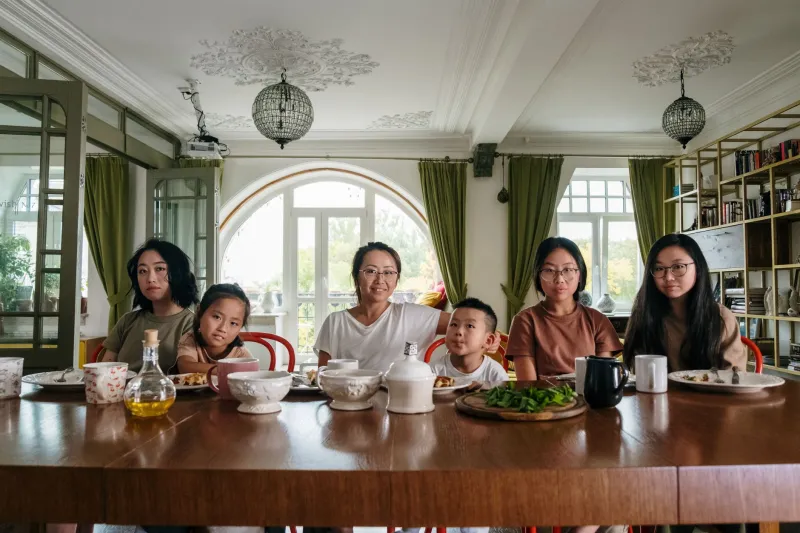
It used to be the most reliable hour of the day.
Six o'clock — or five-thirty, depending on the family — and everyone came in from wherever they'd been. Work, school, the backyard, the neighbor's house. The smell of something cooking pulled people toward the kitchen the way gravity works: naturally, without argument. You sat down. You ate. You talked, or you didn't, but you were there, together, without the option of being anywhere else.
That ritual — ordinary to the point of invisibility for most of American history — has been quietly dismantled over the past two decades. Not dramatically. Not all at once. Just one notification at a time.
What the Table Used to Hold
The family dinner wasn't just about food. It was infrastructure.
It was where parents found out what was actually happening at school — not the edited version kids offered when asked directly, but the real story, the one that emerged sideways during a conversation about something else. It was where siblings negotiated their relationships, where grudges got aired or quietly dropped, where the texture of family life was woven and rewoven every evening.
Researchers at Columbia University's Center on Addiction spent years studying the correlation between family dinners and adolescent wellbeing. Their findings were consistent and striking: teenagers who ate dinner with their families five or more times a week were significantly less likely to use drugs, less likely to experience depression, and more likely to perform well academically. The dinner table, it turned out, was doing a lot of invisible heavy lifting.
None of that required the food to be good. It required presence.
The Slow Erosion
The first disruptions were structural. As the 1980s and 1990s progressed, dual-income households became the norm rather than the exception. Schedules grew more fragmented. Kids were shuttled between activities — soccer practice, piano lessons, debate club — that didn't align neatly with a shared mealtime. The dinner table didn't disappear; it just became harder to coordinate.
Then television arrived at the table. Then portable devices. And then, around 2010, the smartphone completed what those earlier technologies had only begun.
The difference between a TV in the kitchen and a smartphone at the table is significant. A television is a shared distraction — everyone watches the same thing, which at least creates a common experience, however passive. A smartphone is a private portal. Each person at the table is simultaneously present and somewhere else entirely: in a group chat, on a social feed, in a game, in a work email that couldn't wait until after dinner but almost certainly could.
The table is physically occupied. The people around it are not entirely there.
Boredom Did the Work
Here's something that sounds strange until you think about it: the reason family dinners worked so well for so long is partly because there was nothing else to do.
Boredom — the particular kind that comes from being in a room with people you know well and having no external stimulation — is conversationally generative. When there's no phone to check and no screen to watch, you talk. Not because you planned to, but because silence has a weight to it, and filling it comes naturally. You ask questions you wouldn't have thought to ask. You listen more carefully because there's nothing competing for your attention.
The smartphone didn't just add distraction to the dinner table. It eliminated the productive discomfort that made the dinner table work. Now, the moment a conversational lull appears, someone reaches for their phone — and the lull never resolves into something more interesting, because it never gets the chance.
What the Research Says Now
The data on family meals in the smartphone era is sobering. According to surveys from the American College of Health, family dinner frequency has declined steadily since 2010. When dinners do happen, screen use at the table is common across all age groups — not just teenagers. Parents check work emails. Partners scroll through feeds. The phone sits face-up next to the plate like a third guest who hasn't been formally invited but won't leave.
Child development researchers have noted a corresponding decline in what they call "family narrative" — the shared storytelling that happens naturally during unstructured family time. Children who grow up without regular family meals show weaker social vocabulary, less practice with conversational turn-taking, and fewer opportunities to process daily experiences through the act of describing them to someone who cares.
These aren't catastrophic findings. But they're cumulative. And they point to something real.
The Table Is Still There
The interesting thing is that most American families still want the shared meal. Surveys consistently show that people across age groups consider family dinner important. The desire hasn't gone away. What's gone is the default — the assumption that dinner is the time when devices get put down, because there simply isn't another option.
Creating that default again requires a deliberate choice in a way it never used to. Phones in a basket by the door. A household norm that nobody checks their screen during the meal. The decision, made consciously, to be in one place at one time without an escape hatch.
It sounds simple. It turns out to be quietly countercultural.
At Beyond The Index, we track the distance between where we started and where we are. In this case, the distance is measured not in years or technology cycles, but in the number of dinners where everyone was genuinely present — and the number where they weren't.