The Toolbox Inheritance: When Every American Dad Was Also the Family Engineer
The Saturday Morning Ritual
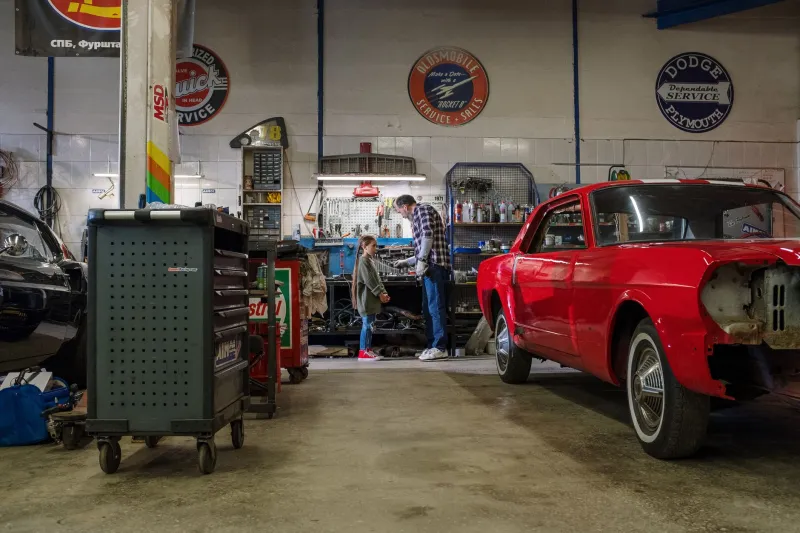
Every Saturday morning in suburban America circa 1975, you'd hear the same sounds echoing through neighborhoods: the whir of circular saws, the rhythmic hammering of roof repairs, and fathers explaining to their sons why you always turn off the circuit breaker before touching any wires. These weren't professional contractors — they were just regular homeowners handling what they considered routine maintenance.
Walk through those same neighborhoods today, and the Saturday soundtrack has changed dramatically. Instead of power tools, you're more likely to hear the rumble of contractor trucks and the beeping of work vehicles backing into driveways. What was once considered basic homeowner competence has become a specialized service industry.
The Competence That Built Suburbia
The post-war housing boom created millions of American homeowners, and they came equipped with skills that seem almost superhuman today. The average suburban dad could rewire a kitchen, replumb a bathroom, frame an addition, and tune up the family car — all without consulting YouTube or calling for backup.
This wasn't just weekend warrior enthusiasm. It was practical necessity born from different economic and social realities. Labor was expensive relative to materials. Professional services were limited in many areas. And most importantly, these skills were passed down through generations like family recipes.
Fathers taught sons how to read electrical diagrams, how to sweat copper pipes, and how to calculate load-bearing requirements. The family toolbox wasn't just a collection of implements — it was an inheritance of capability that stretched back generations.
The Knowledge Network
Before Home Depot and Lowe's created the modern DIY retail experience, homeowners relied on a different kind of infrastructure. Hardware stores were staffed by people who actually knew how things worked. The guy behind the counter could tell you exactly which gauge wire you needed for a 240-volt outlet and probably had a story about the last time someone got it wrong.
 Photo: Home Depot, via i.pinimg.com
Neighborhood expertise was pooled and shared freely. Every block had someone who understood plumbing, someone who could diagnose electrical problems, and someone who knew how to work with concrete. Saturday mornings often involved informal consultations over backyard fences, with neighbors sharing tools and troubleshooting problems together.
Libraries maintained extensive collections of repair manuals and how-to guides. Popular Mechanics and Family Handyman weren't just magazines — they were essential references that homeowners actually studied and applied. The idea that you could learn complex repair skills from written instructions wasn't optimistic thinking; it was standard practice.
 Photo: Family Handyman, via minewiki.pl
 Photo: Popular Mechanics, via neurologies.fr
The Regulatory Shift
The transformation away from DIY competence didn't happen overnight. It began with changes in building codes and safety regulations that, while well-intentioned, gradually moved routine maintenance into professional territory.
Electrical codes became more complex, requiring specialized knowledge to ensure compliance. Plumbing regulations multiplied, with different requirements for different types of installations. What had once been straightforward repairs now required permits, inspections, and certified installers.
Insurance policies began excluding coverage for DIY work that wasn't performed by licensed professionals. Homeowners who might have confidently tackled a bathroom renovation found themselves facing potential liability issues if something went wrong down the line.
The liability culture that emerged in the 1980s and 1990s created additional pressure toward professional services. The risk of being sued for faulty DIY work — whether by future home buyers or injured family members — made many homeowners reluctant to attempt significant repairs themselves.
The Knowledge Exodus
As regulatory complexity increased, something more fundamental was changing: the transmission of practical knowledge between generations was breaking down. Fathers who had learned repair skills from their own fathers found themselves working longer hours in office jobs, with less time for hands-on teaching.
The rise of apartment living and condominium ownership meant that many Americans reached adulthood without ever having responsibility for maintaining a physical structure. College-bound kids spent their teenage years focused on academics rather than learning practical skills.
Educational systems shifted away from shop classes and vocational training, emphasizing college preparation over hands-on competence. The message was clear: smart kids learned to think, not to work with their hands.
The Contractor Economy
What emerged was a professionalized service economy built around tasks that homeowners once handled themselves. The contractor industry exploded, creating specialists for increasingly narrow categories of work. You couldn't just call a handyman anymore — you needed a licensed electrician for outlets, a certified plumber for faucets, and a bonded roofer for shingles.
This specialization brought real benefits. Professional work is generally safer, more reliable, and often completed faster than DIY efforts. Modern contractors have access to specialized tools and materials that individual homeowners couldn't justify purchasing.
But it also created a different relationship between homeowners and their houses. Instead of understanding how their homes worked, homeowners became managers of service providers. The intimate knowledge of a house's quirks and systems — the kind of understanding that came from personally maintaining every component — was replaced by a more distant, transactional relationship.
The Hidden Costs
The shift toward professional services solved some problems while creating others. Routine maintenance that once cost the price of materials and a Saturday afternoon now requires scheduling, estimates, and significant expense. A leaky faucet that grandfather would have fixed with a 50-cent washer now means calling a plumber for a $150 service call.
More subtly, the loss of hands-on competence changed how Americans relate to their physical environment. Previous generations understood how things worked because they regularly took them apart and put them back together. Today's homeowners often live surrounded by systems they don't understand and can't repair.
This dependence creates anxiety and expense. Every strange noise, minor leak, or electrical quirk becomes a potential emergency requiring professional intervention. The confidence that came from understanding your home's systems has been replaced by the stress of not knowing when something might fail catastrophically.
The New DIY
Today's version of home maintenance competence looks very different. YouTube has replaced the neighborhood expert and the library repair manual. Home improvement stores offer classes on basic skills that were once passed down naturally. Online forums provide the community knowledge that used to exist on every block.
Some homeowners are reclaiming hands-on skills, driven by both economic necessity and a desire for self-reliance. The maker movement and DIY culture represent a conscious effort to rebuild practical competence in a world that no longer assumes everyone has it.
But even enthusiastic DIYers today face barriers their predecessors didn't encounter. Modern appliances are designed to be replaced rather than repaired. Building codes require professional certification for work that homeowners once did routinely. The infrastructure that supported widespread DIY competence — knowledgeable hardware store staff, neighborhood expertise, and intergenerational skill transfer — has largely disappeared.
What We've Traded
The transformation from a fix-it-yourself culture to a call-the-professional economy represents more than just a change in home maintenance practices. It reflects a broader shift in how Americans relate to the physical world around them.
We've gained safety, reliability, and the freedom to focus our time and energy on other pursuits. We've lost the satisfaction of solving problems with our hands, the confidence that comes from understanding how things work, and the economic independence of being able to maintain our own homes.
The toolbox inheritance that once passed from father to son has been replaced by a contacts list of service providers. It's undoubtedly more convenient. Whether it's better depends on what you think we're here to do.